-
Aloe vera & Aftersun
-
Magnesium Oil & Blends
-
Carrier Oils
-
Massage Oils
-
Hair & Face
-
Magnesium Bath & Beauty
-
Castile Soap
-
Wellness Packs
- Gift Cards

Spring has a peculiar way of making us look around our homes with fresh, slightly horrified eyes. The cabinet under the sink that you've been meaning to organize since last October. The cluttered shelf in the laundry room that seems to multiply bottles overnight. The bathroom vanity crammed with products whose ingredient lists read like a chemistry exam you never asked to take.
There's a better way - and it's been around for centuries.
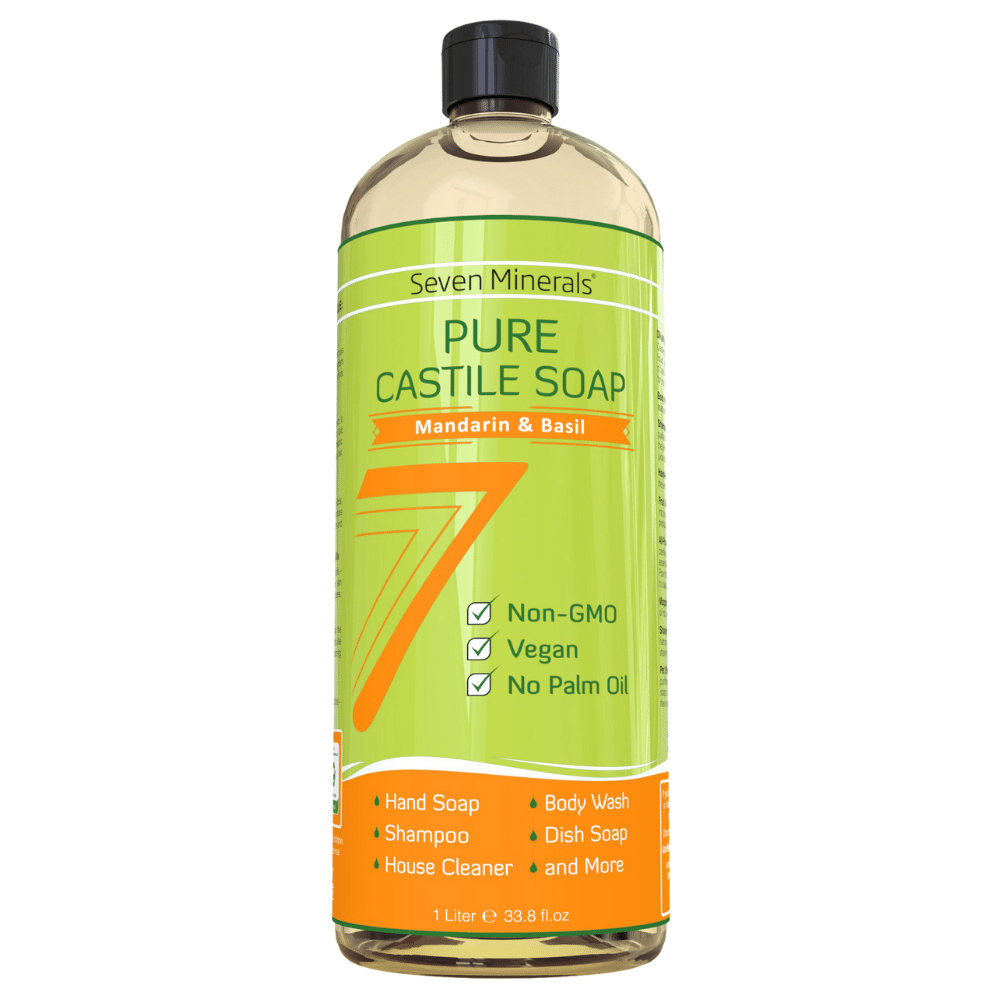
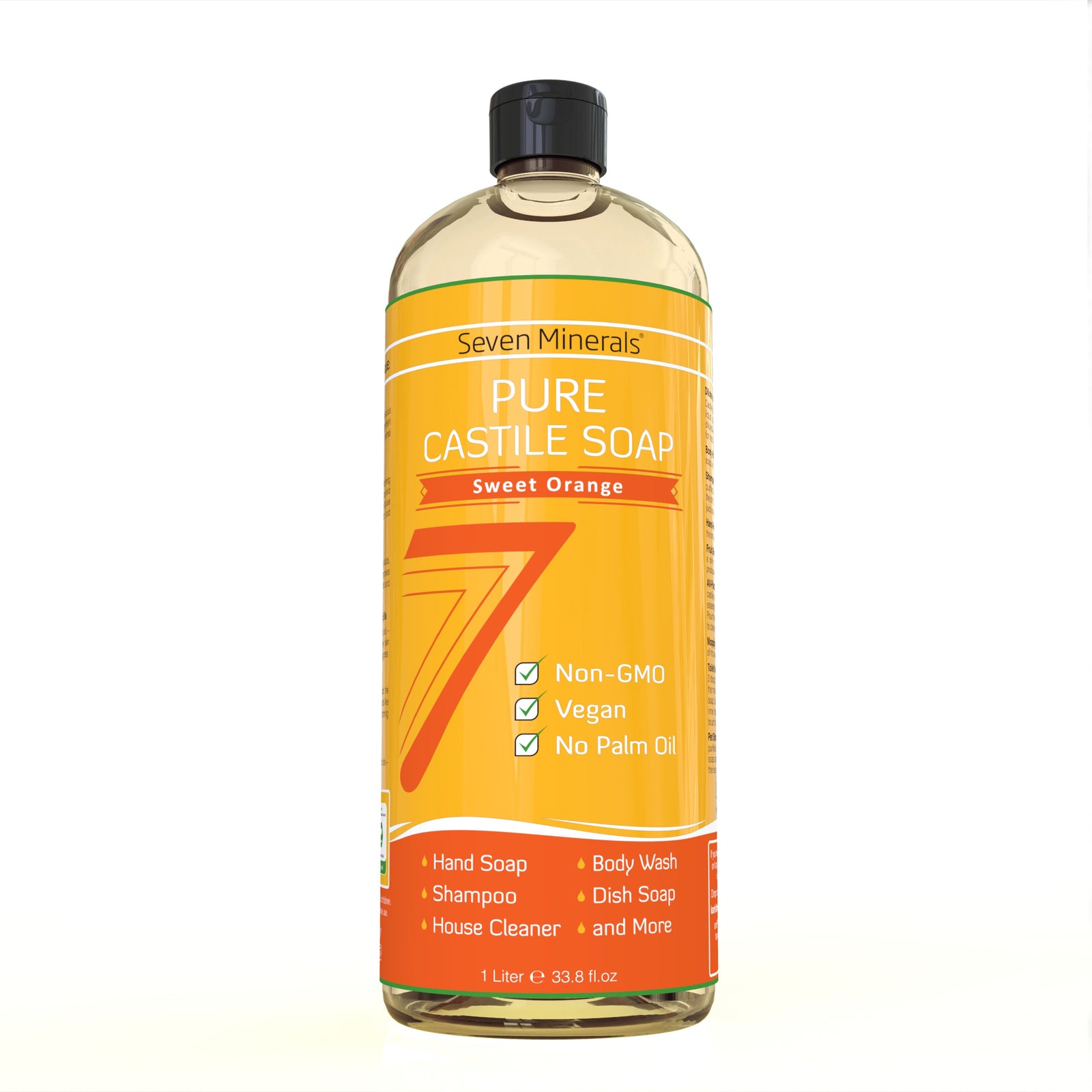
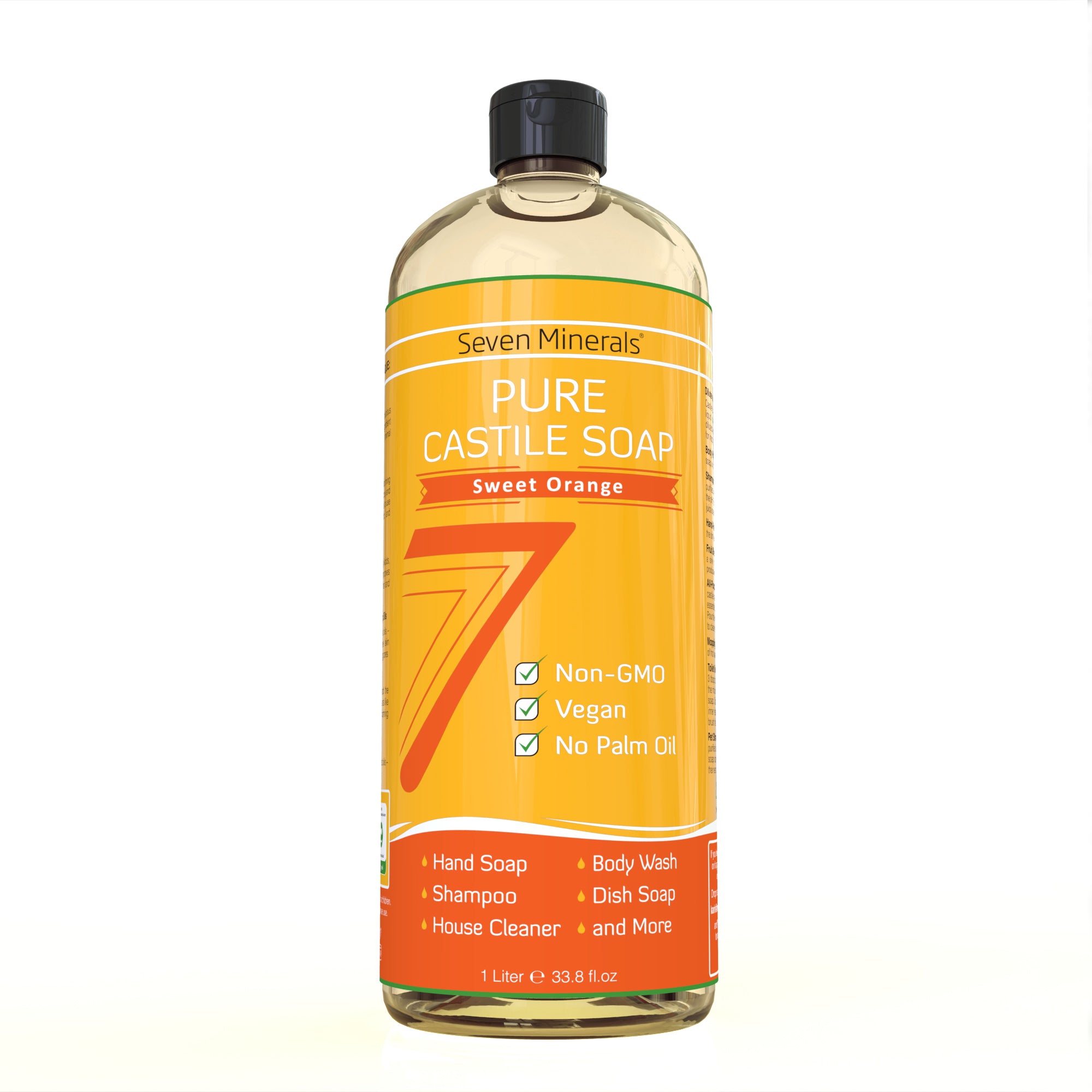
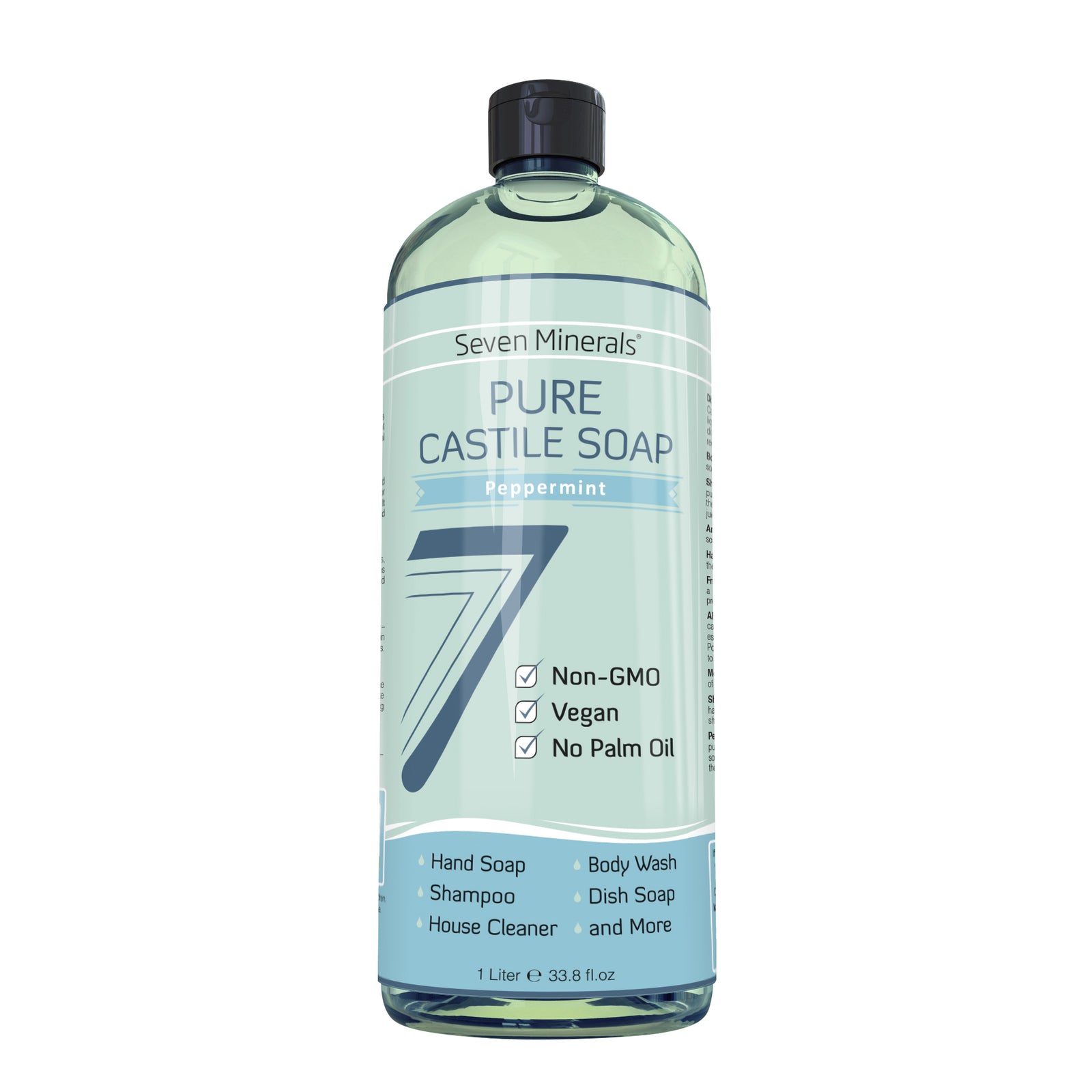
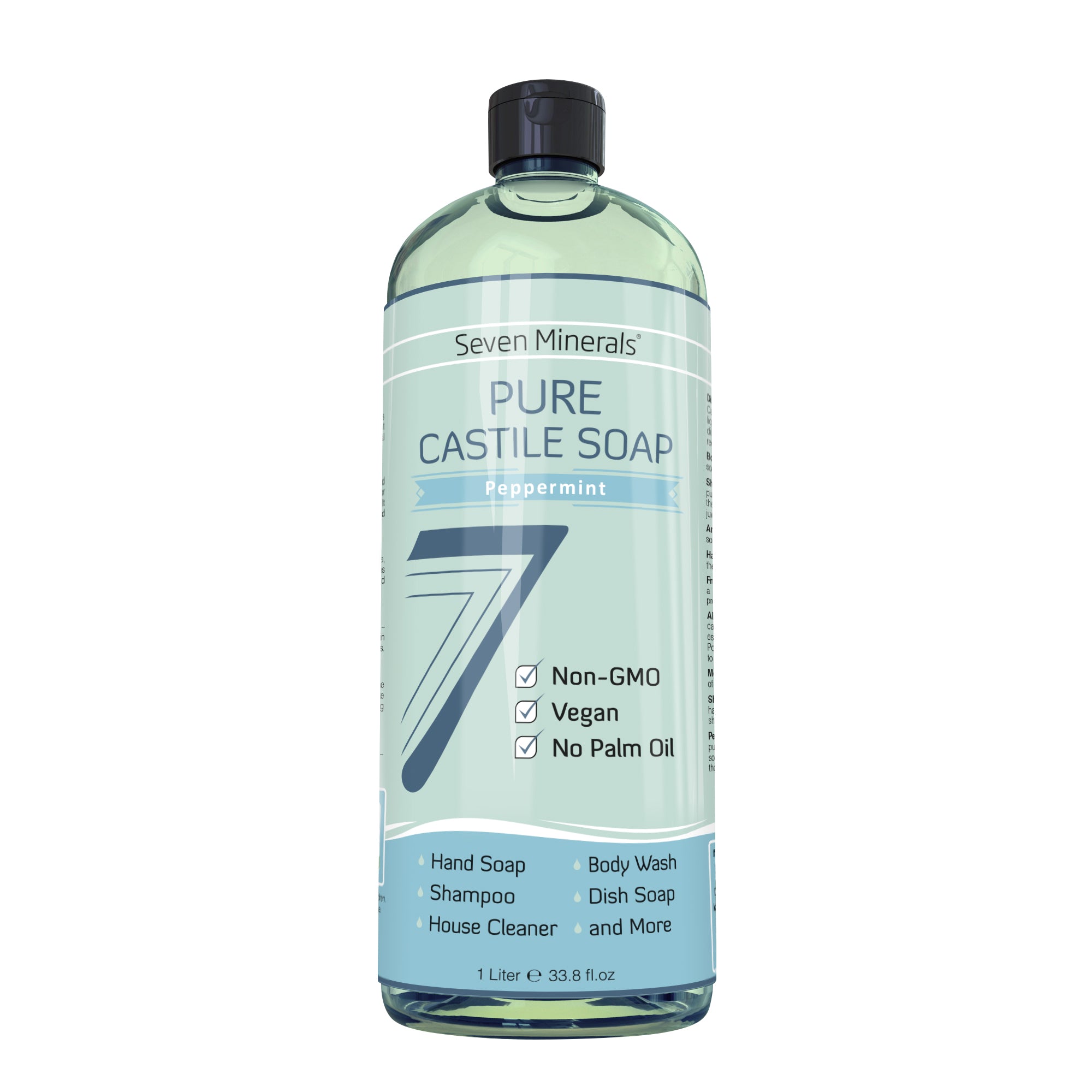
This isn't a minimalism manifesto that asks you to own three forks and sleep on the floor. This is a practical, room-by-room guide to replacing the sprawling chaos of your cleaning cabinet - and even parts of your beauty shelf - with one remarkably versatile, plant-based product: Seven Minerals Castile Soap.
By the end of this post, you'll understand exactly why Castile soap can do what it does, which products it can genuinely replace, how to use it in every room of your home, and why it might be the most underrated beauty secret hiding in plain sight. We'll cover the chemistry, the recipes, the beauty hacks, and the mindset shift that makes this more than just cleaning - it's a full lifestyle reset.
Let's start at the beginning.
Castile soap originated in the Castile region of Spain, where craftspeople discovered that combining olive oil with an alkaline solution through a process called saponification produced a surprisingly effective, gentle, and biodegradable cleanser. For centuries, it was one of the only soaps used for everything from washing bodies to scrubbing floors to cleaning dishes - and people got along just fine.
Modern Castile soap formulas have expanded beyond pure olive oil to include a thoughtful blend of plant-based oils, each contributing something different to the final product:
Olive oil forms the backbone of most quality Castile soaps. It's deeply conditioning, gentle on sensitive skin, and produces a rich, creamy lather that cleans without stripping.
Coconut oil is the workhorse. It contributes cleaning power, creates abundant foam, and has natural antibacterial properties - making it the main driver of Castile soap's effectiveness as a household cleaner.
Hemp seed oil brings skin-nourishing fatty acids to the formula, supporting the skin barrier and making Castile soap remarkably suitable for use directly on your face and body.
Jojoba oil rounds out many premium formulas with its unique molecular structure. Technically a liquid wax rather than an oil, jojoba closely mimics the skin's natural sebum, which is why it's a favorite in high-end skincare products.
What Castile soap doesn't contain is equally important: no synthetic detergents, no artificial preservatives, no petroleum-derived ingredients, no harsh sulfates like sodium lauryl sulfate (SLS), and no artificial dyes. When you choose a palm oil–free formula like Seven Minerals Castile Soap - a deliberate ethical choice, since conventional palm farming drives devastating deforestation - you're also making a statement about the kind of supply chains you want to support.
True Castile soap is entirely biodegradable and safe for greywater and septic systems. It won't harm aquatic ecosystems when it makes its way down your drain. For a product doing heavy cleaning duty all day long, those aren't small things.
Open it right now. Count the bottles.
Most households, when they actually inventory everything, discover somewhere between 15 and 30 distinct cleaning products. Glass cleaner. Bathroom spray. Tub and tile scrub. Toilet bowl cleaner. Kitchen degreaser. All-purpose spray. Dish soap. Dishwasher pods. Produce wash. Wood floor cleaner. Hardwood polish. Furniture spray. Laundry detergent. Fabric softener. Stain remover. Hand soap. Pet shampoo. The list goes on.
Each of these products exists because clever marketing convinced us we needed a different specialized formula for every surface in our home. But think about it: how different is your kitchen counter from your bathroom counter, really? Why does one require a "kitchen formula" and the other a "bathroom formula"? The answer, most of the time, is that it doesn't - that's just how the products were packaged and sold.
Here's what actually happens when you have 25 cleaning products:
You're spending significantly more money. Premium specialty cleaners cost between $4 and $12 a bottle. Multiply that by 20+ products and you're spending $80–$240 just to keep the cabinet stocked. A single quality bottle of concentrated Castile soap diluted appropriately goes dramatically further.
You're accumulating unnecessary plastic waste. Each of those bottles is typically single-use plastic. Even with recycling, a significant portion ends up in landfills. One concentrated bottle replacing multiple others is a meaningful reduction in packaging.
You're exposing your household to a cocktail of chemicals. Many conventional cleaning products contain VOCs (volatile organic compounds) that off-gas into your indoor air. Fragrance formulas - listed simply as "fragrance" on ingredient labels - can contain dozens of undisclosed synthetic chemicals. Mixing certain products (bleach and ammonia, for instance) can create genuinely hazardous reactions. Simplifying to a single, transparent-ingredient product eliminates all of that risk.

Decision fatigue is real. Every time you reach for a cleaner, you make a micro-decision: which one? Grab the wrong one and you might damage a surface. Simplifying to one or two core products removes that friction entirely. Your cleaning routine becomes automatic.
The shift to Castile soap isn't about deprivation - it's about recognizing that the complexity you've accumulated wasn't serving you. It was serving the companies selling you 20 different products.
Before we get to recipes, there's one critical piece of chemistry that will make your Castile soap experience far more successful. Understanding it takes about 60 seconds and saves you a lot of frustration.
Castile soap is alkaline - it sits on the high end of the pH scale, typically around pH 9 to 10. This alkalinity is what allows it to break down grease, lift dirt, and disrupt the cell membranes of bacteria and other microorganisms.
Vinegar is acidic - it sits on the low end of the pH scale, around pH 2 to 3. Vinegar is a popular natural cleaning ingredient for its own legitimate reasons: it cuts through mineral deposits, kills certain bacteria, and leaves surfaces streak-free.
Here's the problem: when you mix an acid and a base, they neutralize each other. Adding vinegar directly to Castile soap in the same container - or spraying vinegar immediately after applying Castile soap without rinsing - creates a chemical reaction that reverses the saponification process. The soap essentially breaks back down into its component oils, leaving you with a greasy, milky, ineffective mess on your surface.
This doesn't mean you can't use both products in your cleaning routine. It just means you use them sequentially, not simultaneously. Clean the surface with Castile soap solution first. Rinse or wipe clean. Then, if you want the streak-free shine or mineral deposit removal that vinegar provides, apply a diluted vinegar solution afterward. This two-step approach is sometimes called the "one-two punch method" and it works beautifully.
Likewise, Castile soap plays nicely with:
Keep these pairings in mind as we walk through the recipes.
The kitchen is often the most chemically-laden room in the house - ironic, given that it's where you prepare food. You've got degreasers, dish soaps, produce washes, and surface sprays, many of which contain ingredients you'd never intentionally put near food.
All-Purpose Kitchen Spray Combine 2 tablespoons of Castile soap with 2 cups of water in a spray bottle. Shake gently before use. This works on countertops (including granite, marble, and quartz), appliance surfaces, cabinet faces, and backsplashes. For extra grease-cutting power, add 10 drops of lemon or orange essential oil. Citrus oils contain d-limonene, a natural solvent that's particularly effective against kitchen grease.

Produce Wash Fill a large bowl with cold water and add ¼ teaspoon of unscented Castile soap. Submerge your fruits and vegetables, swish gently, and rinse thoroughly under running water. This removes pesticide residues, wax coatings, and surface bacteria far more effectively than plain water. The key word is "thoroughly" - rinse until no soap remains.
Dish Soap Castile soap can be used directly on a dish brush or sponge for hand washing. For a more traditional pump-bottle experience, dilute at a ratio of 1 part soap to 10 parts water. It won't produce the same mountain of suds as commercial dish soap (most of that foam is synthetic lathering agents added purely for visual effect), but it will clean your dishes thoroughly.
Stovetop Degreaser For baked-on grease, apply undiluted or lightly diluted Castile soap directly to the surface. Let it sit for two to three minutes to allow the saponification chemistry to do its work on the grease molecules. Then scrub with a damp cloth or non-scratch scrubber and wipe clean.
Dishwasher Detergent Booster Add a tablespoon of Castile soap to your dishwasher's main wash compartment alongside your regular detergent. It boosts cleaning power and leaves dishes cleaner, especially in hard water areas.
Bathrooms deal with a specific combination of challenges: soap scum, hard water minerals, mold-prone moisture, and the particular biology of toilet bowls. Castile soap, combined with baking soda, handles all of it.
Soft Scrub Paste Mix ¾ cup baking soda with ¼ cup Castile soap until you have a paste the consistency of frosting. Add 15–20 drops of tea tree essential oil (a potent natural antimicrobial and antifungal) and 10 drops of peppermint or eucalyptus oil for freshness. This paste works brilliantly on tub surrounds, tile grout, sinks, and shower floors. Apply with a sponge, scrub in circular motions, and rinse clean.
Toilet Bowl Cleaner Dilute Castile soap 1:4 with water in a small container. Pour a generous amount into the toilet bowl. Sprinkle in some baking soda for fizzing action (unlike vinegar, baking soda is alkaline and won't neutralize the soap). Let it sit for five minutes, then scrub with a toilet brush and flush. For stubborn mineral rings, follow up with a vinegar spray after flushing - the toilet has been rinsed, so there's no direct acid-base mixing issue.
Daily Shower Spray Keep a spray bottle of diluted Castile soap (about 1 tablespoon per cup of water) in the shower. After your last shower of the day, give the walls a quick spray and let it sit overnight. The soap prevents soap scum and mildew from gaining a foothold. Rinse in the morning before your first shower.
Grout Refresh Apply the soft scrub paste above to grout lines using an old toothbrush. The mild abrasion of the baking soda combined with the soap's cleaning power lifts staining and inhibits mildew regrowth. Rinse thoroughly and allow to dry completely.
Hard Floor Cleaner For mopping hardwood, tile, or laminate floors, add ½ cup of Castile soap to a bucket of hot water. Mop as usual. The key is to wring the mop very well - you want damp, not wet, especially on hardwood. The slight alkalinity of the soap actually helps lift ground-in dirt from grout lines and between flooring boards. No rinsing required for most applications; the dilution is low enough that residue isn't an issue.
Natural Dusting Spray For wood furniture, combine 1 cup distilled water, 2 teaspoons Castile soap, and 1 tablespoon olive oil in a spray bottle. Shake well before each use. The olive oil conditions and nourishes wood surfaces while the soap lifts dust and grime. This single recipe replaces dedicated wood polish and furniture spray.
Glass and Mirrors Add 1 tablespoon of Castile soap to 1 quart of water. Clean glass surfaces with a microfiber cloth dampened in this solution. Follow immediately with a squeegee or dry microfiber cloth before it dries to prevent streaking. For streak-free results, the follow-up with a diluted vinegar solution (after the soap is wiped away) is particularly effective.
Upholstery Spot Cleaner For fabric furniture stains, mix a few drops of Castile soap with warm water and work into a light foam with your fingers. Apply to the stain using a clean white cloth, working from the outer edge inward to prevent spreading. Blot rather than scrub. Allow to air dry, then vacuum the area once dry.
This is one of the most surprising applications - and one of the biggest money-savers.
Liquid Laundry Detergent Combine 1 cup of washing soda (sodium carbonate - available in the laundry aisle), 1 cup of borax, and 1 cup of liquid Castile soap. Add hot water to fill a one-gallon container and shake to combine. Use ¼ to ½ cup per load. This formula cleans effectively in both HE and standard machines and costs a fraction of commercial detergent per load.
Delicate Fabrics For hand washing delicates - wool, silk, lace, intimates - add 1 tablespoon of Castile soap to a gallon of cold water. Submerge the garment, gently agitate, let soak for 10 minutes, and rinse thoroughly. The gentle, non-stripping nature of Castile soap is actually ideal for delicate fibers that synthetic detergents can degrade over time.
Pre-Treatment Stain Remover Apply Castile soap directly to a stain, rub gently to work it into the fabric, and let sit for 15–30 minutes before washing. This works particularly well on protein-based stains (blood, sweat, food) because the alkalinity helps break down the proteins.
Fabric Softener Alternative If you add white vinegar to your washing machine's rinse compartment (where you'd normally put fabric softener), it neutralizes any residual soap alkalinity, softens fabric naturally, and prevents buildup in your machine. The vinegar smell does not transfer to clothing - it rinses out completely.
Patio and Outdoor Furniture Mix warm water with a generous squeeze of Castile soap in a bucket. Use a scrub brush to work the solution into plastic, resin, or powder-coated metal furniture. Rinse with a garden hose. For fabric cushions, the same solution applied with a scrub brush and rinsed thoroughly removes winter grime, mold, and staining without damaging the fabric's UV-protective coating.
Garden Pest Spray Combine 1 tablespoon of Castile soap with 1 quart of water in a spray bottle. Spray directly on plants affected by soft-bodied pests: aphids, whiteflies, spider mites, and mealybugs. The soap disrupts the insects' outer coating, dehydrating them without using synthetic pesticides. Always spray in the early morning or evening to avoid burning foliage in direct sunlight, and test on a small area first for sensitive plants.
Garden Tool Cleaner After use, rinse tools in a bucket of Castile soap and water. For rusted or heavily soiled tools, scrub with a stiff brush dipped in the soap solution. Rinse and dry thoroughly before storing.
This is where we need to have a conversation that might genuinely change your skincare routine - and potentially save you a significant amount of money and cabinet space in your bathroom.

The beauty industry is masterful at creating complexity. Cleansers designed specifically for oily skin. Other cleansers for dry skin. Separate formulas for sensitive skin, acne-prone skin, mature skin. Makeup removers. Micellar waters. Double-cleansing systems involving two different products applied in sequence. Eye makeup removers formulated separately from face cleansers. Body washes. Hand soaps. Foaming face washes. The message, carefully cultivated over decades of marketing, is that your skin requires a highly specialized, proprietary formula for every conceivable scenario.
Here's what dermatology actually tells us: your skin primarily needs two things from a cleanser. It needs gentle surfactants to remove oil, dead skin cells, and environmental pollutants. And it needs those surfactants to stop doing their job the moment you rinse, leaving your skin's natural oil balance intact rather than stripped.
Castile soap - particularly Seven Minerals formulas enriched with hemp and jojoba oils - does exactly this, and nothing more or less.
The idea of using soap on your face might initially feel alarming. Decades of skincare marketing have thoroughly embedded the idea that soap is harsh, drying, and damaging to facial skin. And to be fair, that reputation is earned by traditional bar soaps made with tallow or synthetic detergent bars - products that create an artificially high pH environment and strip your skin's natural acid mantle.
Castile soap, while alkaline, is far gentler than synthetic detergents. When properly diluted for facial use, it effectively removes dirt, excess oil, sunscreen, and light makeup without disrupting the skin barrier the way harsh cleansers do.
Basic Liquid Face Wash Add a small pump of Castile soap - approximately the size of a grape - directly to wet hands. Emulsify with warm water until slightly foamy. Apply to your face in gentle circular motions, spending about 30 seconds working it into the skin. Rinse thoroughly with cool water, which helps close pores. Pat dry with a clean cloth.
This is genuinely sufficient for most skin types as a morning wash when your face primarily needs to be freshened, not deeply cleansed.
Foaming Face Wash (The Beauty Upgrade) This is the recipe that consistently surprises people with how luxurious and effective it is. You need a foaming pump dispenser - these are widely available online and in beauty stores for a few dollars and completely transform the experience.
Fill the bottle with:
The foaming pump aerates this mixture into a light, pillowy foam that feels expensive and professional. It rinses clean without residue and leaves skin feeling genuinely soft - not the squeaky-tight feeling that many cleansers leave, which is actually a sign that your skin has been over-stripped.
For Makeup Removal Castile soap handles most makeup effectively, including foundation, powder, blush, and mascara. For very waterproof formulas or long-wear products, apply a small amount of jojoba oil or coconut oil first to break down the waterproof seal (this is the oil-cleansing method). Follow with your Castile soap face wash to remove the oil along with the dissolved makeup. This two-step approach is gentler than any makeup remover wipe or dedicated makeup remover formula.
For Different Skin Types
Oily or acne-prone skin: Use the basic formula with tea tree and lavender essential oils. Follow with a light, non-comedogenic moisturizer. The soap's ability to cut through excess sebum without triggering overproduction makes it surprisingly well-suited for oily skin types who've been stuck in a cycle of harsh cleansing followed by oily rebound.
Dry or sensitive skin: Add more jojoba oil to your formula - up to 1 tablespoon per bottle. Rinse with lukewarm (not hot) water. Apply moisturizer while skin is still slightly damp to lock in hydration. The hemp oil in many Castile soap formulas is rich in omega fatty acids that support the skin barrier.
Combination skin: The standard foaming formula with a light oil addition typically works well. Focus the product on the oilier T-zone and use lighter pressure on drier cheek areas.
What to Expect During Transition If you've been using a foaming cleanser with synthetic surfactants, your skin may take 2–4 weeks to adjust to a gentler cleanser. During this period, some people experience either temporary excess oiliness (as the skin recalibrates after being over-stripped) or mild breakouts (as pores adjust). This is normal and typically resolves within a month. If irritation is severe or persistent, discontinue and consult a dermatologist.
Using Castile soap as a body wash is perhaps the most straightforward swap of all.
Basic Body Wash Apply a small amount directly to a washcloth, loofah, or your hands and lather with warm water. The soap cleans thoroughly without the long ingredient lists of commercial body washes. For dry skin, add a teaspoon of a carrier oil like sweet almond, sunflower, or jojoba to a small amount of Castile soap in your palm - this creates an in-shower moisturizer that leaves skin feeling soft without a greasy residue.
Shaving Cream Alternative Castile soap creates enough slip and lubrication for a smooth shave, particularly for legs. Lather generously, allow the foam to sit on the skin for a minute before shaving, and rinse the razor frequently. The conditioning oils in the soap simultaneously moisturize the skin, reducing the need for a separate post-shave lotion.
Hand Soap Fill a foaming pump dispenser with ¼ Castile soap and ¾ water. Add a few drops of lavender or tea tree oil for antibacterial support and fragrance. This is significantly less expensive than commercial hand soaps, especially refillable or premium formulas, and is gentle enough for frequent handwashing without drying.
DIY Sugar Scrub Combine Castile soap with granulated sugar or fine sea salt at a 1:2 ratio, adding a tablespoon of coconut or sweet almond oil. This makes a simple, effective exfoliating body scrub that buffs away dead skin cells while cleaning. Use immediately after making (it doesn't store well once the salt or sugar begins dissolving the soap) or make fresh small batches as needed.
The scent you choose matters more than you might think. Research in environmental psychology consistently shows that fragrance directly influences mood, energy levels, and cognitive performance. When cleaning smells like something you'd choose to put on your body, the entire experience shifts from chore to ritual.
Citrus (Lemon, Orange, Grapefruit): These scents are stimulating and uplifting, associated with increased alertness and positive mood. Ideal for morning cleaning sessions, kitchens, and home offices. The energizing quality makes them particularly well-suited for tackling the big spring declutter.
Lavender: Calming, stress-reducing, and faintly sweet. Lavender is the scent of transition - of winding down a busy day, of shifting from one season to the next. Use in bedrooms and evening cleaning routines.
Tea Tree: Sharp, medicinal, and clean-smelling. Tea tree's fragrance carries the psychological weight of its genuine antimicrobial properties - it smells like something that's working. Good for bathrooms and any space where you want that extra clean assurance.
Peppermint: Cool, energizing, and clarifying. Peppermint has been shown to improve focus and reduce fatigue. Excellent for long cleaning sessions.
Eucalyptus: Fresh, slightly medicinal, deeply associated with spa environments. Creates an immediate sense of clean-air spaciousness. Wonderful in bathrooms and laundry areas.
You can blend essential oils to create signature scents for different rooms or seasons. Try citrus and peppermint for the kitchen, lavender and eucalyptus for the bathroom, and a custom blend of whatever brings you joy for your living spaces. Because Castile soap is essentially a neutral, oil-based carrier, it works beautifully with any essential oil combination.

There's something profound about opening a cleaning cabinet and seeing two or three clearly labeled bottles instead of a chaotic tower of products you've been avoiding reorganizing for months.
Minimalism in cleaning supplies isn't about deprivation or virtue signaling. It's about recognizing that complexity doesn't improve outcomes - it just increases noise. When every surface in your home can be cleaned with one solution made from transparent, plant-based ingredients you actually understand, something relaxes in your relationship with your home.
You stop having to remember which cleaner works on granite and which damages it. You stop worrying about accidentally mixing products that shouldn't be combined. You stop the constant low-grade mental note that you need to pick up more of Product X next time you're at the store.
Every product you remove from your cabinet is a micro-decision permanently removed from your mental load. That cumulative reduction in cognitive clutter - what psychologists call "decision fatigue" - is genuinely meaningful over days, weeks, and months.
And then there's the larger picture. The average American household generates roughly 62 pounds of cleaning product plastic waste per year. If even a fraction of that could be replaced by concentrated, multi-use formulas in a single bottle, the collective impact would be significant. When you choose a palm oil–free, plant-based soap made with sustainably sourced ingredients, you're opting out of supply chains that cause real harm - to ecosystems, to communities in palm-growing regions, and to the climate.
Your cleaning routine connects to the world in ways you might not have considered.
The transition doesn't have to be all-or-nothing. Here's a gentle approach:
Day 1–2: Inventory and Audit. Pull everything out of your cleaning cabinet. Note what's almost empty and don't replace it. Identify the products that are doing redundant jobs (how many "all-purpose" sprays do you actually have?).
Day 3–4: The Kitchen Swap. Replace your kitchen spray, dish soap, and produce wash with Castile soap dilutions. See how it feels. Notice what you don't miss.
Day 5–6: The Bathroom Transition. Make the soft scrub paste. Try the foaming face wash formula. Replace your hand soap with a foaming dispenser of diluted Castile soap.
Week 2: Laundry and Floors. Make a batch of the liquid laundry soap. Try the floor mop solution.
Week 3: The Beauty Deep Dive. Give yourself a month to experiment with using Castile soap as your daily face wash. Keep notes on how your skin responds.
By the end of a month, most people find they've eliminated at least 70% of their cleaning products and feel no meaningful reduction in cleanliness - and often report feeling better about their homes and their routines than before.
Spring is an invitation. Not just to scrub the baseboards and reorganize the linen closet - though those things feel good too - but to genuinely reconsider which systems in your life are serving you and which ones exist primarily to serve someone else's profit margin.
A cabinet full of specialized single-use cleaning products is, in many ways, a monument to effective marketing. The science doesn't require 25 different formulas. Your home doesn't benefit from all that chemical complexity. Your skin certainly doesn't.
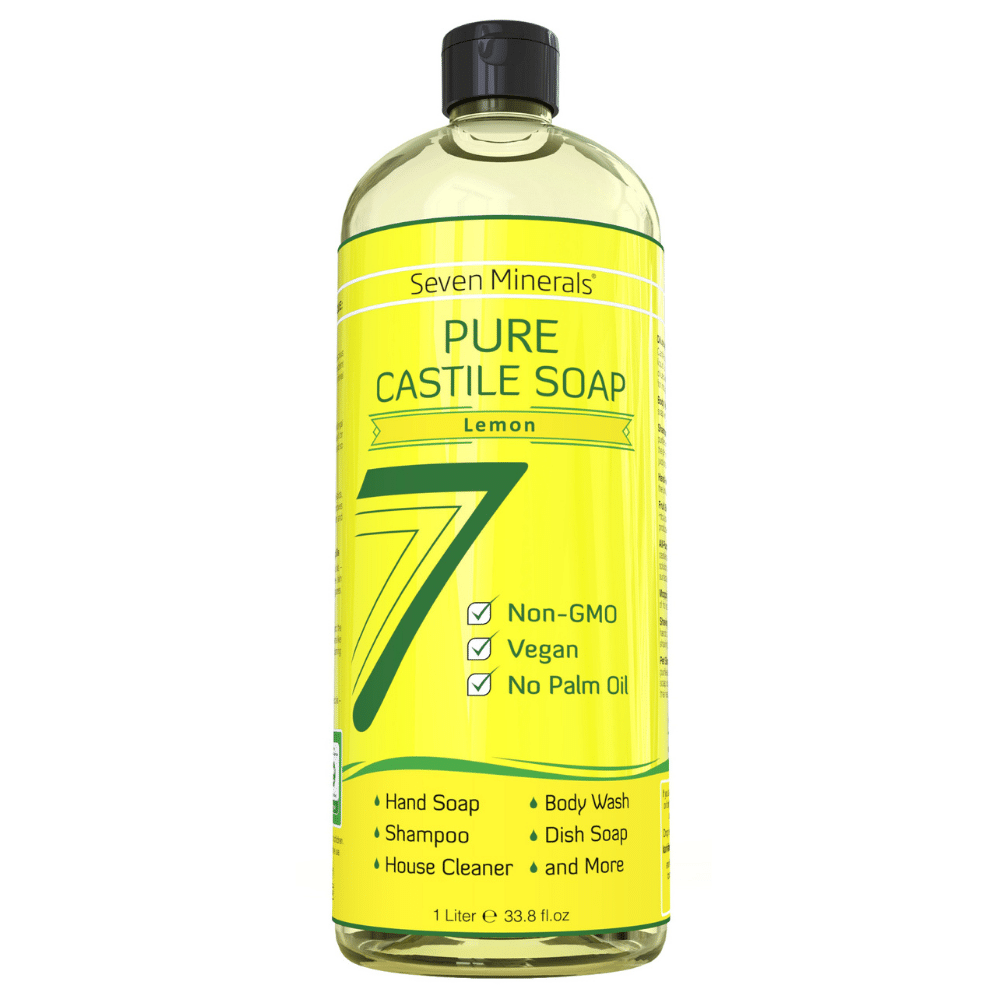
Castile soap - simple, plant-based, centuries-old in its foundations and thoughtfully refined for modern use - offers something genuinely rare in the consumer product world: it actually does what it says, for less money, with fewer ingredients, less packaging, and a lower environmental footprint than almost anything it replaces. Seven Minerals Castile Soap is our top pick for making this switch.
This spring, let one bottle do the work of twenty. Let your cleaning routine smell like something you chose, not something that was chosen for you. Let your face be washed with the same gentle, transparent ingredients you clean your kitchen with.
Clear the cabinet. Clear the clutter. Let the light in.
And let spring be exactly what it was always meant to be: a real beginning.