-
Aloe vera & Aftersun
-
Magnesium Oil & Blends
-
Carrier Oils
-
Massage Oils
-
Hair & Face
-
Magnesium Bath & Beauty
-
Castile Soap
-
Wellness Packs
- Gift Cards
Choosing a good organic castor oil comes down to a handful of specific factors: how the oil was certified, how it was extracted, whether solvents were used, and what's actually in the bottle. This guide walks through each of those decisions plainly so you can buy with confidence and use the product the right way.
USDA organic certification is third-party verified and tells you the castor beans were grown and processed to defined organic standards
Cold-pressed extraction is a mechanical process that keeps the oil minimally processed, which matters to customers seeking a straightforward, single-ingredient product
Hexane-free means no solvent extraction was used; customers who want to avoid solvent-based processing should look for this designation specifically
Castor oil's naturally thick texture is a feature, not a defect, but it does mean application technique matters
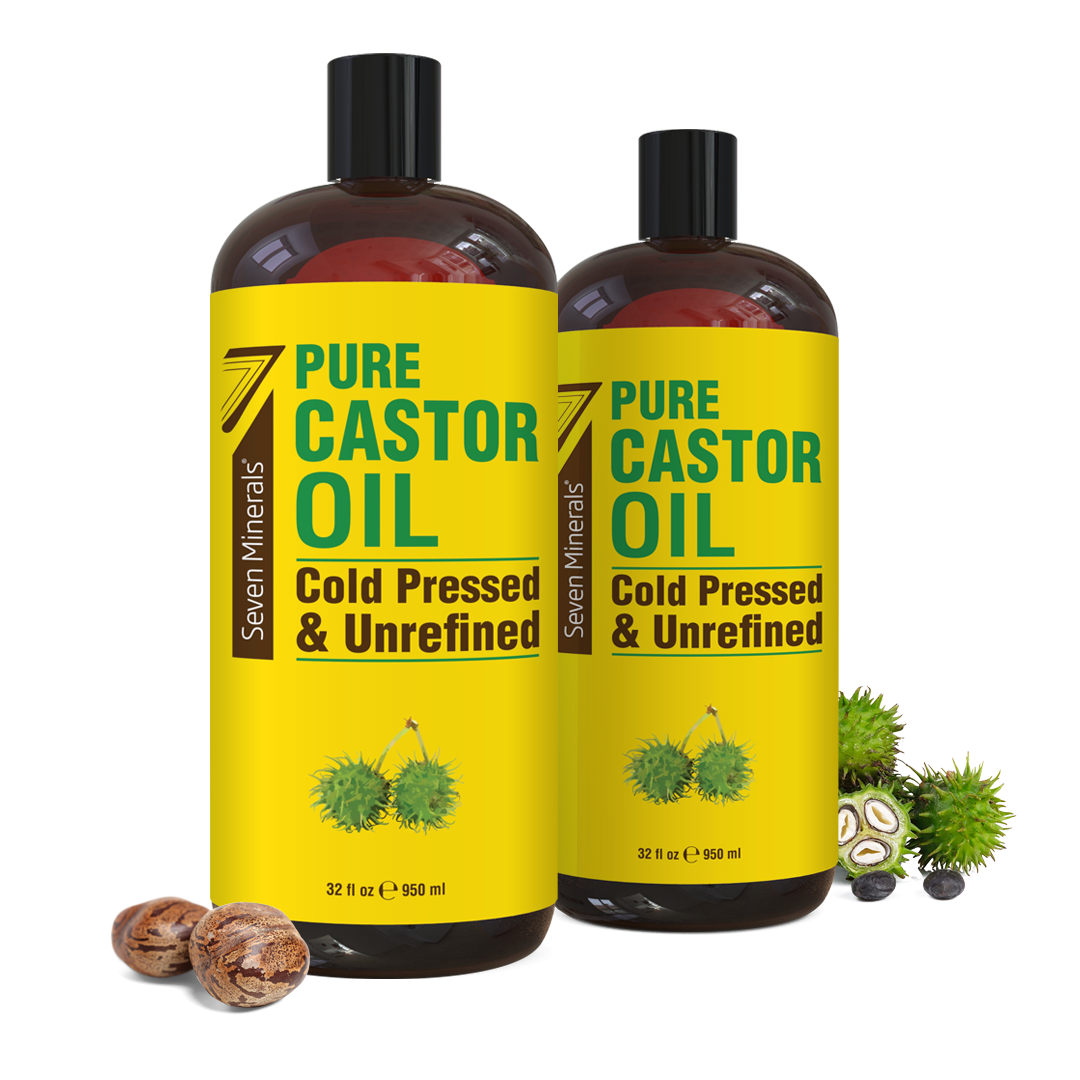
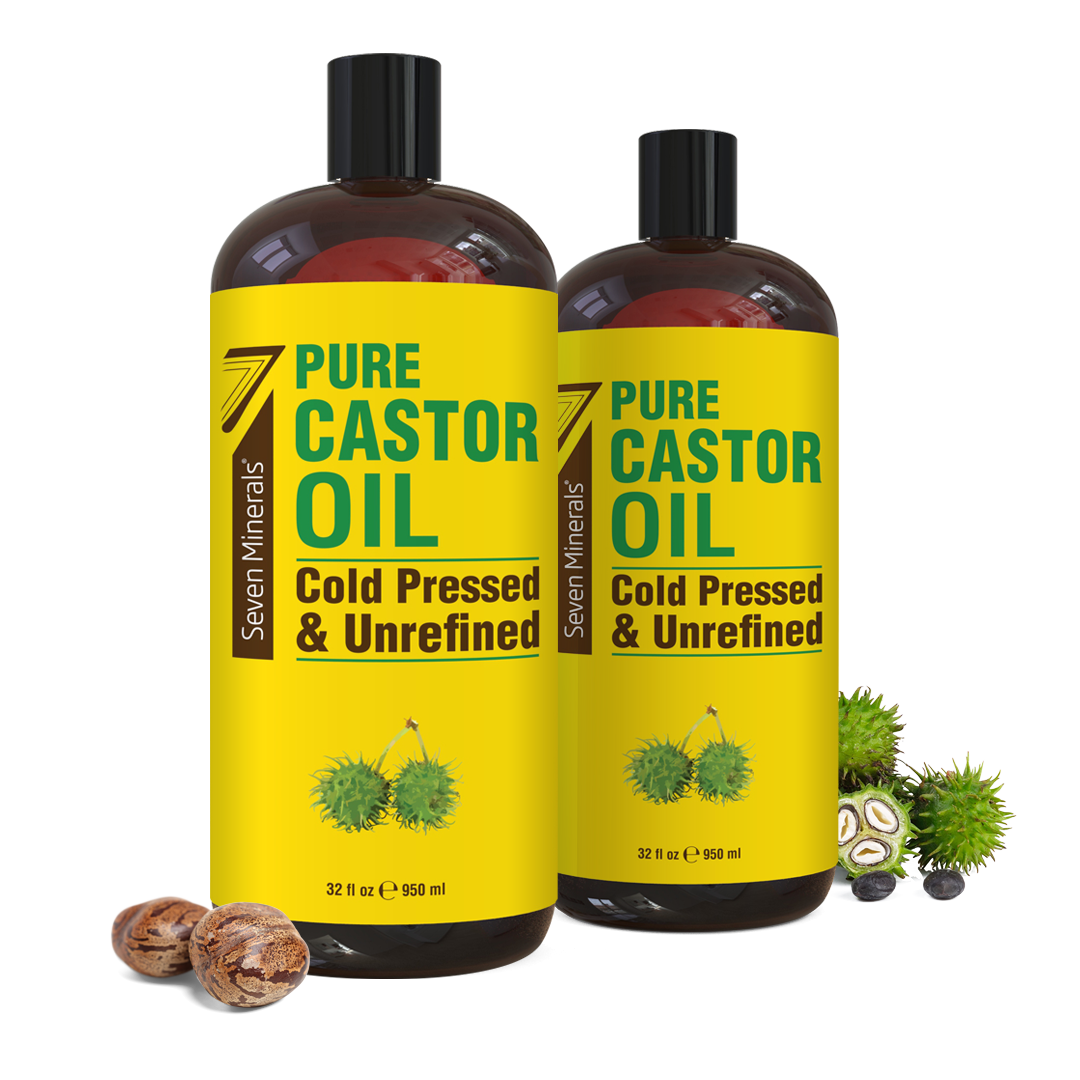
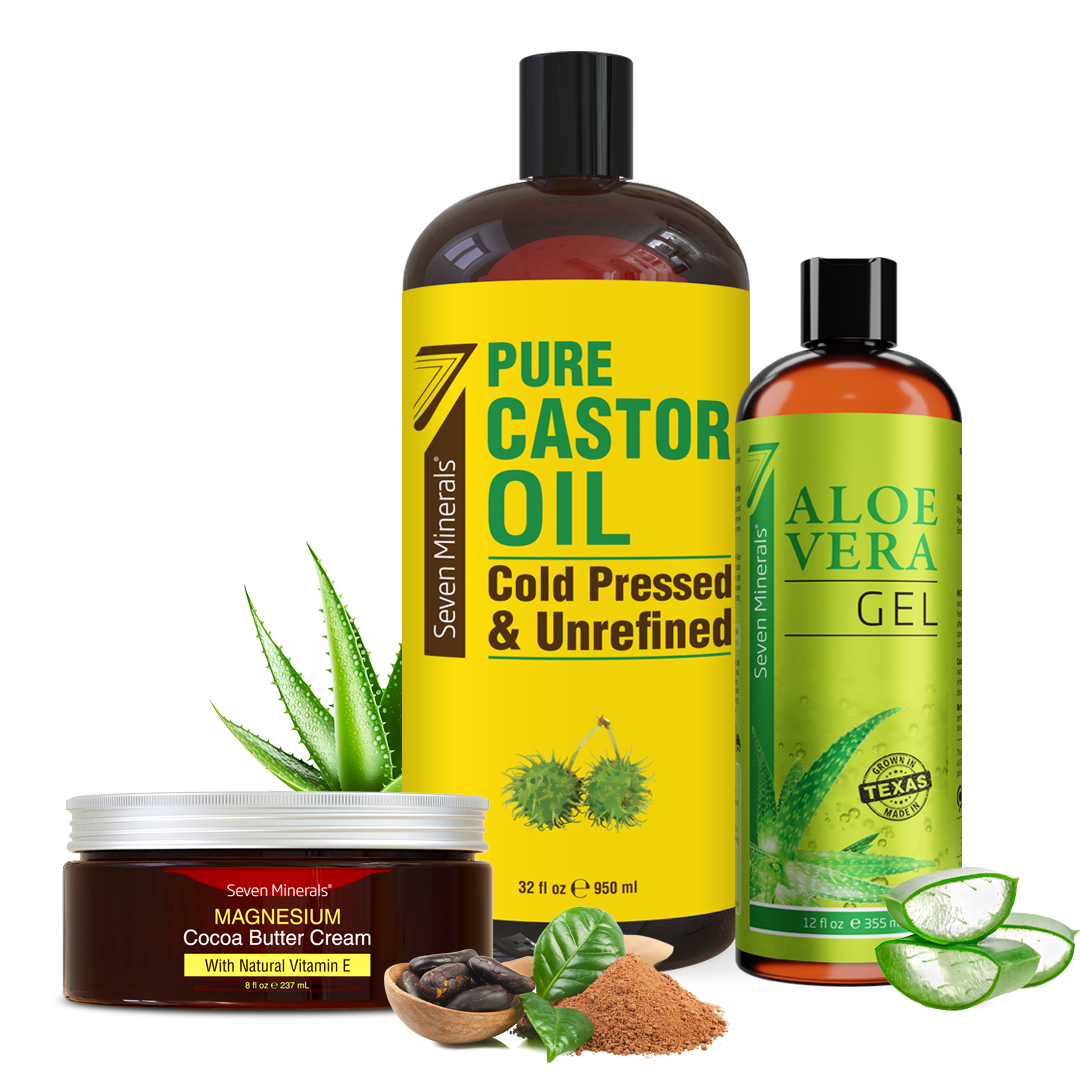
Seven Minerals Organic Castor Oil is USDA certified organic, cold-pressed, and hexane-free
Short answer: if sourcing and production standards matter to you as a shopper, yes.
USDA organic certification is not a marketing phrase. It's a third-party-verified designation that tells you the castor beans were grown according to specific agricultural standards and that the processing met defined organic requirements. For a product you plan to apply to your scalp, skin, lash line, or brows, knowing something concrete about how it was grown and processed is more useful than a vague label claim.
What organic certification is not is a guarantee of any particular safety outcome or proof of superiority over every non-organic product on the market. It's accurate, verifiable information about how the product was made. For customers who read labels and care about sourcing, that information is worth having.
Seven Minerals Organic Castor Oil carries USDA organic certification. That means an independent certifying body reviewed the sourcing and production process, not just the marketing copy.
Cold-pressed extraction is a mechanical process. The oil is pressed from the castor seed using pressure rather than heat or chemical solvents. Customers who prefer minimally processed oils tend to seek out cold-pressed products specifically because the extraction method involves less processing overall.
The alternative, solvent extraction, uses a chemical like hexane to pull oil from the seed more efficiently. The solvent is removed before bottling, and solvent-extracted oils are widely used. For customers who prefer to avoid solvent-based processing entirely, the distinction is meaningful, but this is a preference-based decision rather than a claim that one method produces a categorically unsafe product.
If avoiding solvent extraction is a priority for you, look for a product that is both cold-pressed and verified hexane-free. Cold-pressed alone does not always guarantee hexane-free, so checking for both designations is worthwhile.
Seven Minerals Organic Castor Oil is cold-pressed and hexane-free. The formulation contains one ingredient: castor oil (Ricinus communis). There is no fragrance, no diluting carrier, no preservatives.
Seven Minerals offers castor oil in both glass and plastic formats. Neither format alters the quality of a properly sourced, certified organic oil. Packaging choice comes down to customer preference and practical considerations.
Customers who prefer glass often cite personal preference for the format, the aesthetic, or the fact that glass is reusable and recyclable. Some customers also prefer glass when applying product near the eyes, simply because they prefer inert packaging for that use case.
Plastic packaging offers practical advantages too, including lighter weight, easier travel, and lower cost. Both formats contain the same quality oil.
If glass packaging is a priority for you, Seven Minerals has a glass-bottle SKU. If you prefer plastic for convenience or budget reasons, that is a completely reasonable choice. Neither format makes the oil more or less effective.
Castor oil has a different profile compared to most carrier oils. Its naturally high ricinoleic acid content gives it an unusually thick, occlusive texture that lighter oils like jojoba or argan simply do not have. That texture is what makes it useful for specific applications.
Scalp and hair: Castor oil is commonly used as a scalp conditioning treatment, applied before shampooing and left in before washing out. It also works well on dry ends. The thick texture means it stays where you put it rather than running off, which makes it practical for targeted scalp application.
Lashes and brows: Many people use a small amount of castor oil as an overnight conditioning treatment for lashes and brows. If you want to try this, follow the product directions, use a very small amount, and avoid direct contact with your eyes. A clean, dry spoolie is a practical applicator. Apply lightly from root to tip the way you would mascara. Less is genuinely easier to work with here because castor oil's thickness means a little covers a lot.
Dry skin and body use: On cuticles, elbows, heels, and dry patches, castor oil works as a deeply occlusive moisturizer. It seals moisture in rather than sitting on top and evaporating. For people with very dry or mature skin, blending a small amount of castor oil into a lighter facial oil is one way to add an occlusive layer without applying the thick oil directly to the whole face.
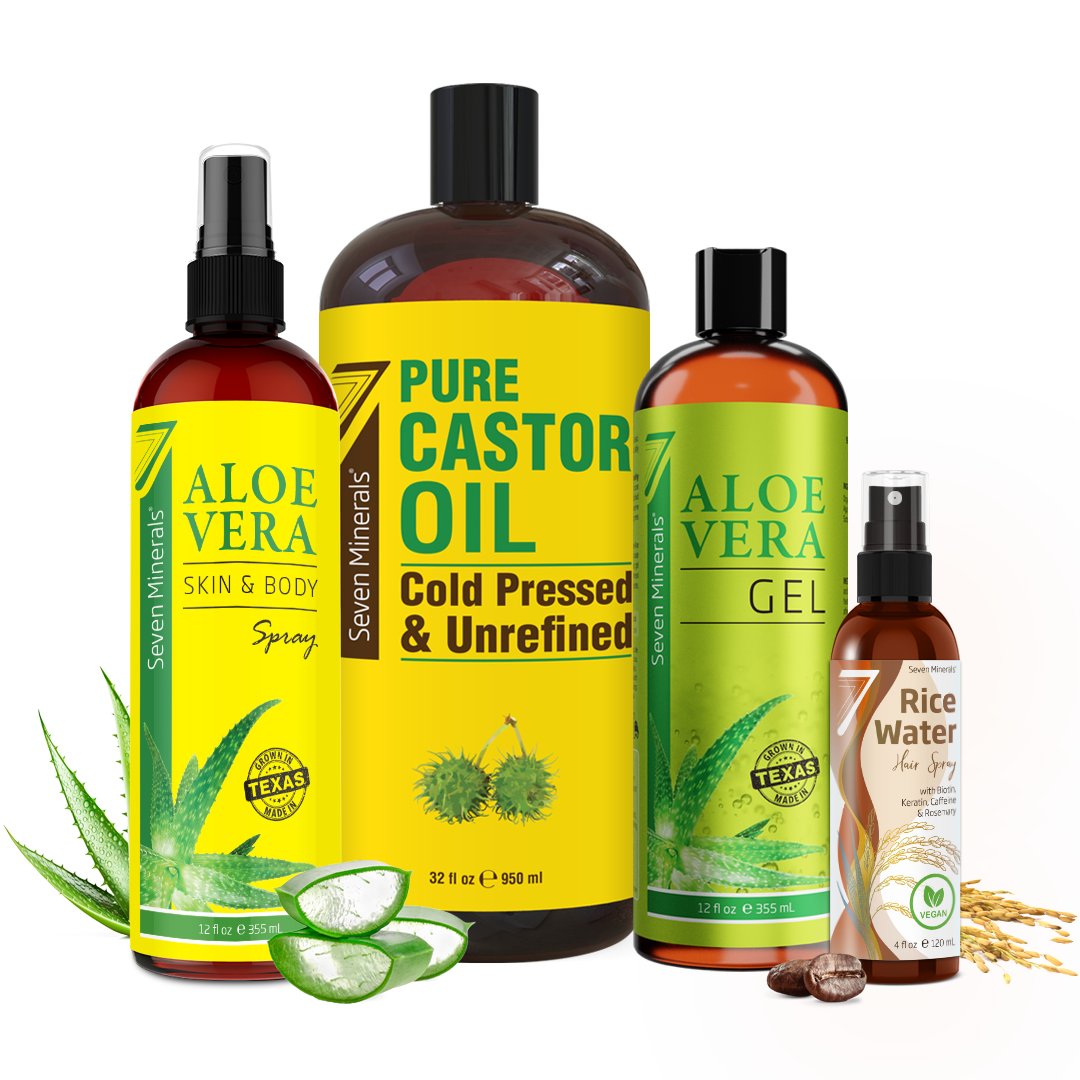
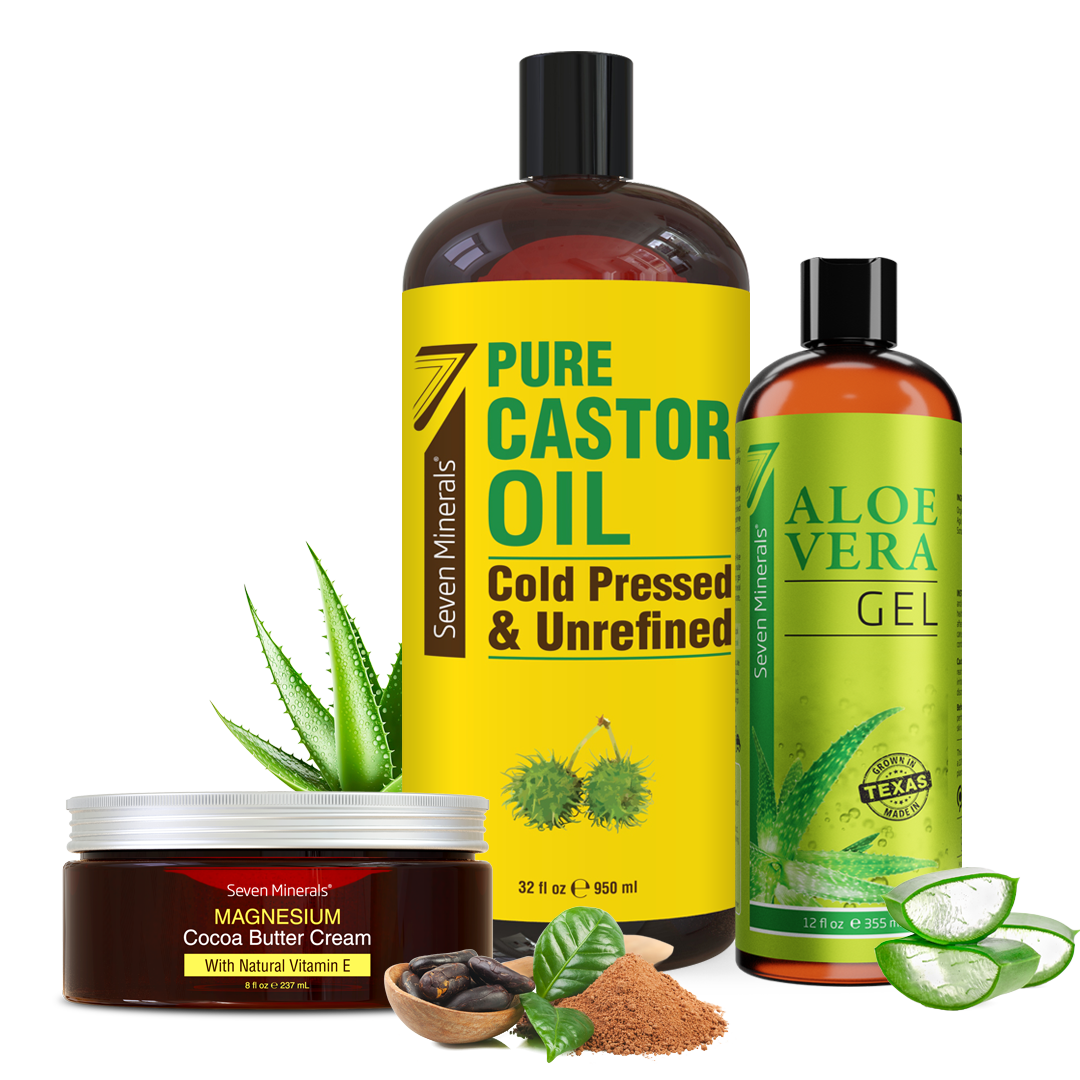
Castor oil and aloe vera in the same routine: If you use both castor oil and an organic aloe vera gel in your skin or hair routine, they work well as separate products within the same routine. Follow each product's directions individually rather than assuming they need to be mixed or layered in a specific order.
This table is meant to help you figure out where castor oil fits relative to other commonly used carrier oils, not to declare a winner.
|
Factor |
Castor Oil |
Jojoba Oil |
Argan Oil |
|
Texture |
Thick, occlusive |
Light, waxy |
Medium, dry-feeling |
|
Best uses |
Scalp, lashes, brows, dry patches |
All-over face, mixed skin |
Facial skin, fine hair |
|
Absorption |
Slow |
Fast |
Medium |
|
Used alone on face |
Preference-dependent; many people find the thickness better suited to targeted or nighttime use |
Yes |
Yes |
|
Works well with |
Lighter carrier oils |
Most carrier oils |
Most carrier oils |
Castor oil earns its place in a routine when you want something that stays put, adds occlusion, and conditions specific areas. It is not a substitute for a lightweight daily facial oil, and trying to use it that way tends to leave people frustrated with the texture.
If you want to explore the full range of available options, the Seven Minerals carrier oils collection includes several cold-pressed options across different textures and uses.
Castor oil is a well-established conditioning ingredient with a clear and useful role in hair and skin care. It is not a treatment for any medical condition.
On the topic of lash and brow growth specifically: the conditioning and protective qualities of the oil may help what is already growing stay in better condition. That is a real and reasonable benefit. What castor oil has not been demonstrated to do is stimulate new follicle growth. Those are different things, and conflating them sets up an expectation the product cannot reliably meet. If you go in expecting conditioning support, you may be satisfied. If you go in expecting documented growth stimulation, the science does not back that up.
Because castor oil is naturally thick, starting with a small amount can make application and cleanup considerably easier. Building from there based on your own experience is more practical than starting heavy.
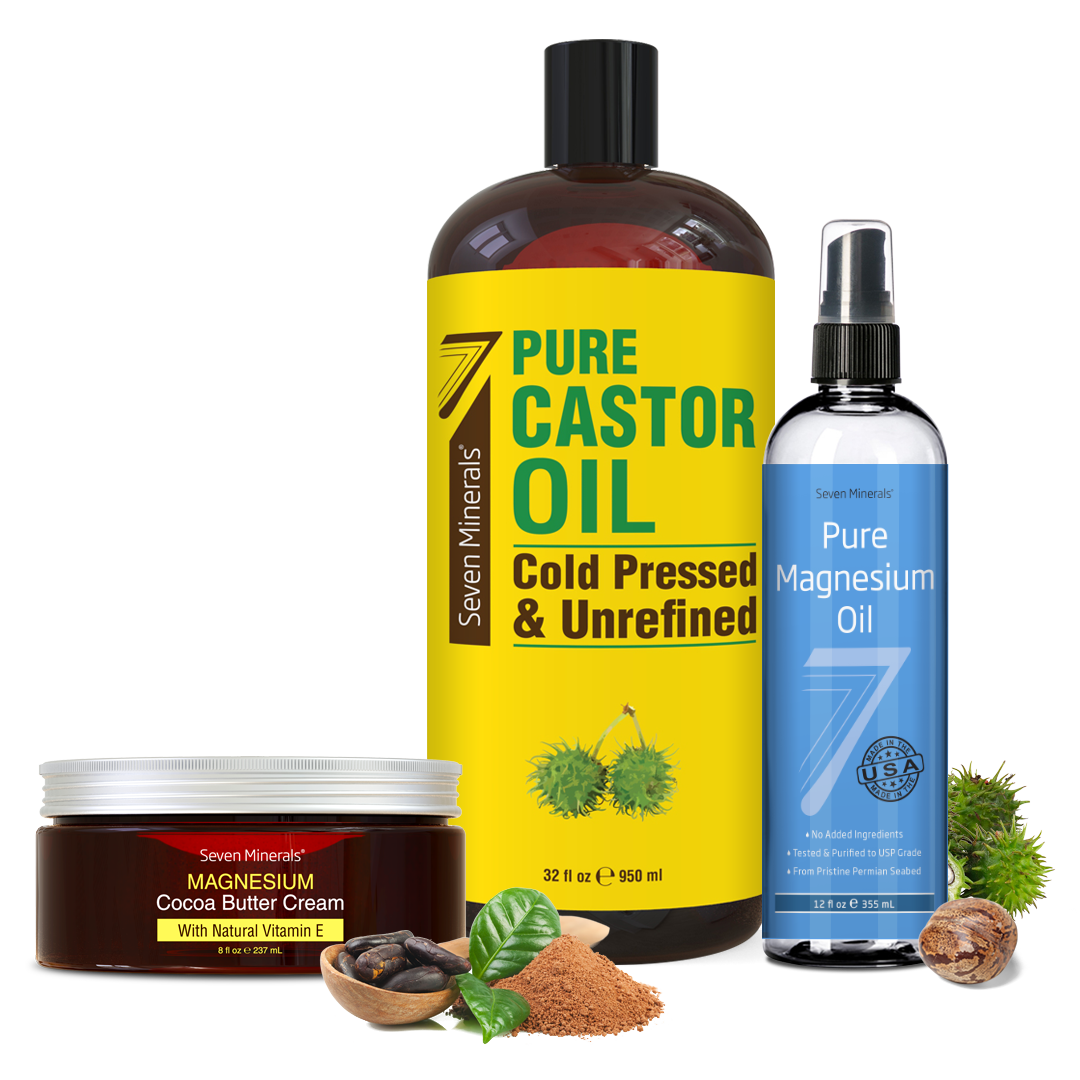
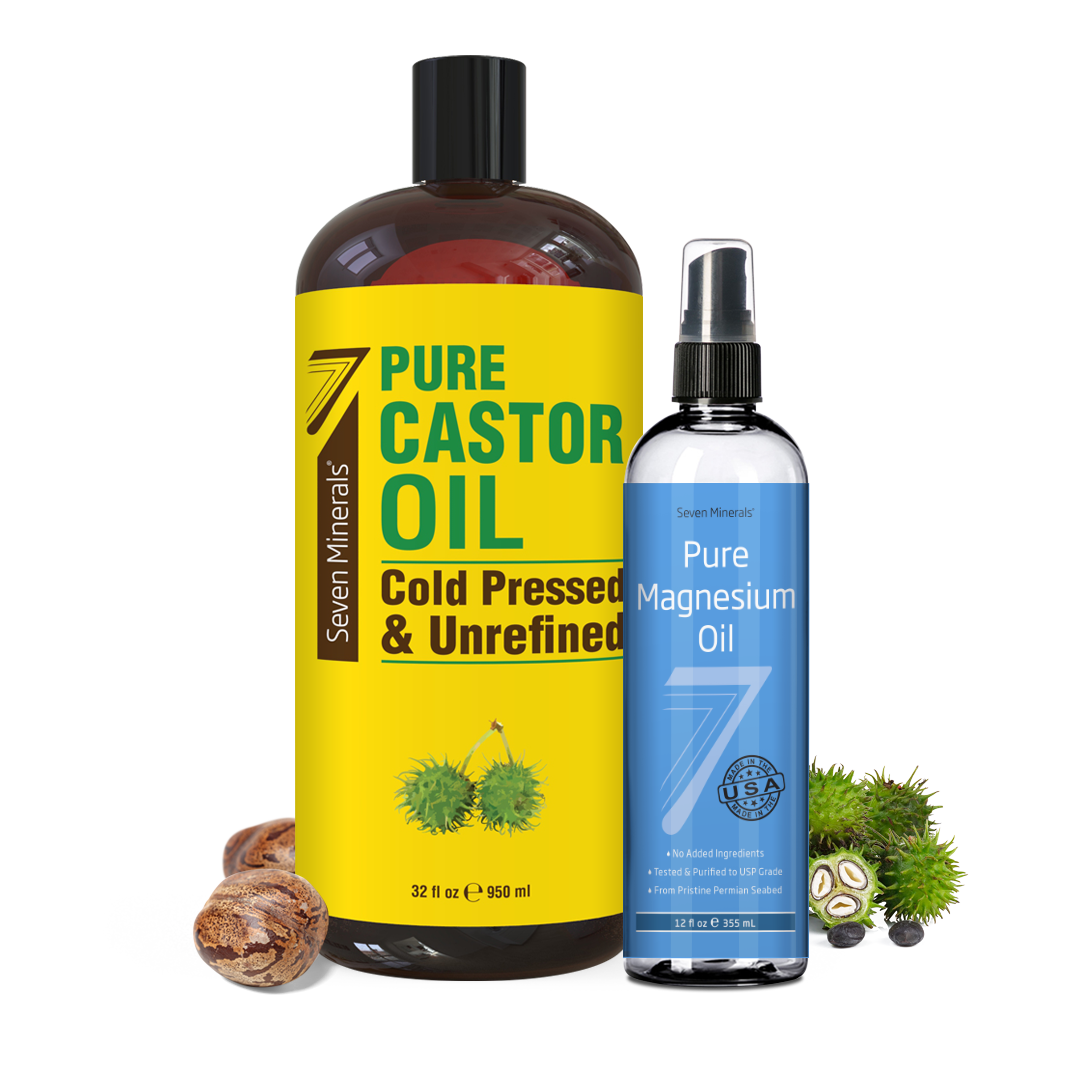
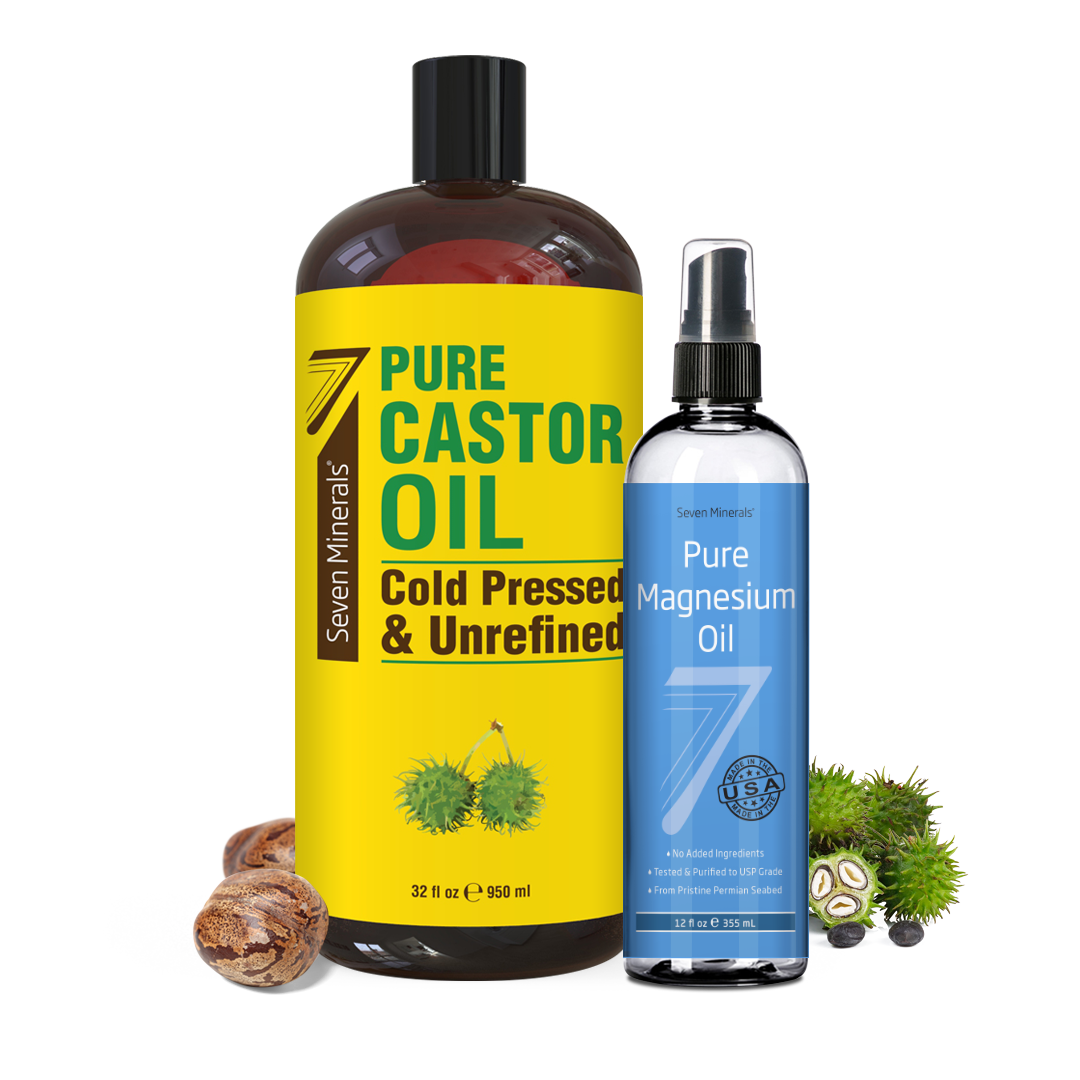
For customers building a broader natural wellness routine, Seven Minerals' best-sellers show what people reach for most, including the castor oil alongside their topical magnesium and organic aloe vera products.
One ingredient: castor oil (Ricinus communis). If the label lists fragrance, preservatives, additional carrier oils, or additives, it is not a single-ingredient product. For USDA certified organic status, look for that designation specifically on the label or product page.
If the product is genuinely pure, the oil itself is the same. What typically differs between "hair" and "skin" labeled castor oils is the applicator or packaging format, not the formulation. A single-ingredient, certified organic, cold-pressed castor oil is the same product regardless of how the label is categorized.
Its naturally thick texture means some people find daily all-over facial use uncomfortable because the oil absorbs slowly. A more practical approach for most people is targeted use on dry areas, around the brow line, or on lashes at night. Individual skin preferences vary, so starting with a small amount and seeing how your skin responds is reasonable guidance.
Cold-pressed castor oil has a mild, slightly earthy scent. It is not strong, but it is noticeable. If you find a product labeled cold-pressed but it has no detectable scent at all, that may indicate the oil has been deodorized or refined through additional processing. However, rely on verified product information from the manufacturer rather than using scent alone to draw conclusions about processing method. Scent can vary based on processing and formulation.
Follow the product directions. Generally, a clean, dry spoolie works well as an applicator. The goal is a light, even coating rather than a saturated application. Apply before bed so the oil has time to condition without being disturbed. Avoid direct contact with your eyes and use a small amount to keep application manageable.
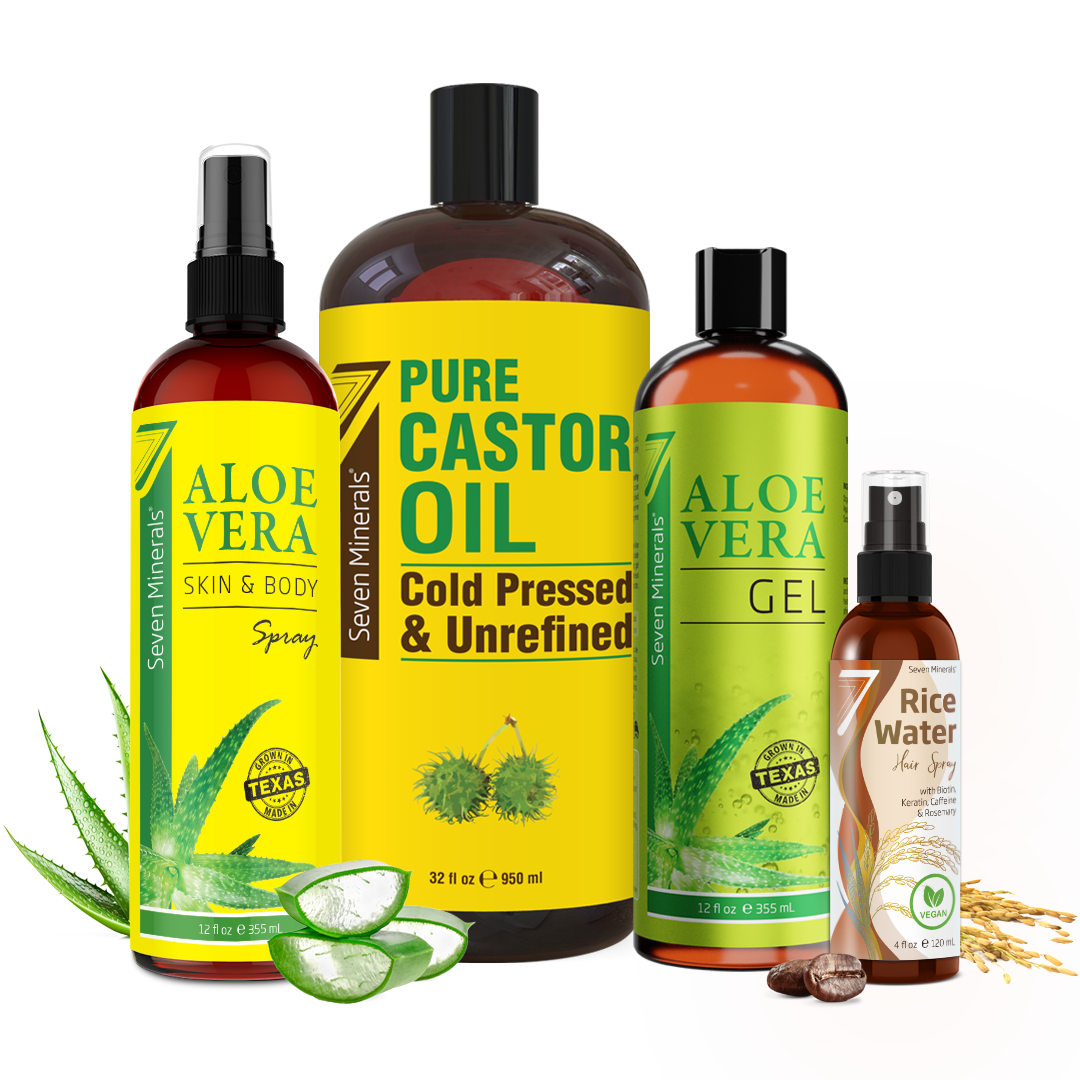
Yes. It fits naturally within a broader skincare or haircare routine. If you are using castor oil alongside the Seven Minerals aloe vera spray or another product from the line, follow each product's directions individually. They work as separate products in the same routine rather than as a combination requiring a specific order.
Seven Minerals is a family-owned company that manufactures its products in the USA. The castor oil is USDA certified organic, cold-pressed, and hexane-free, with a one-ingredient formulation: castor oil (Ricinus communis). You can find the full product details on the Seven Minerals carrier oils page.
Karin is the co-founder of Seven Minerals, a family-owned natural skincare and wellness company she helped establish in 2014. Seven Minerals products are manufactured in the USA with a focus on ingredient transparency, honest sourcing, and formulations that customers can understand and use with genuine confidence.