-
Aloe vera & Aftersun
-
Magnesium Oil & Blends
-
Carrier Oils
-
Massage Oils
-
Hair & Face
-
Magnesium Bath & Beauty
-
Castile Soap
-
Wellness Packs
- Gift Cards
By Karin, Co-founder of Seven Minerals
A magnesium oil spray is magnesium chloride dissolved in water and applied directly to the skin. Choosing the right one comes down to ingredient purity, formula simplicity, and whether it suits your skin's sensitivity. This guide covers what to look for, what common frustrations actually mean, and how to start comfortably from day one.
Ingredient purity matters more than label claims. Look for USP Grade magnesium chloride and a short ingredient list.
Tingling after applying magnesium oil is common and can be a sign that you're likely low in magnesium. For many people, the sensation becomes less noticeable or passes with regular use. If it feels uncomfortable, you can rinse the skin with warm water after about 20 minutes.
White residue after the spray dries is normal. Rinsing with warm water after 20 to 30 minutes takes care of it.
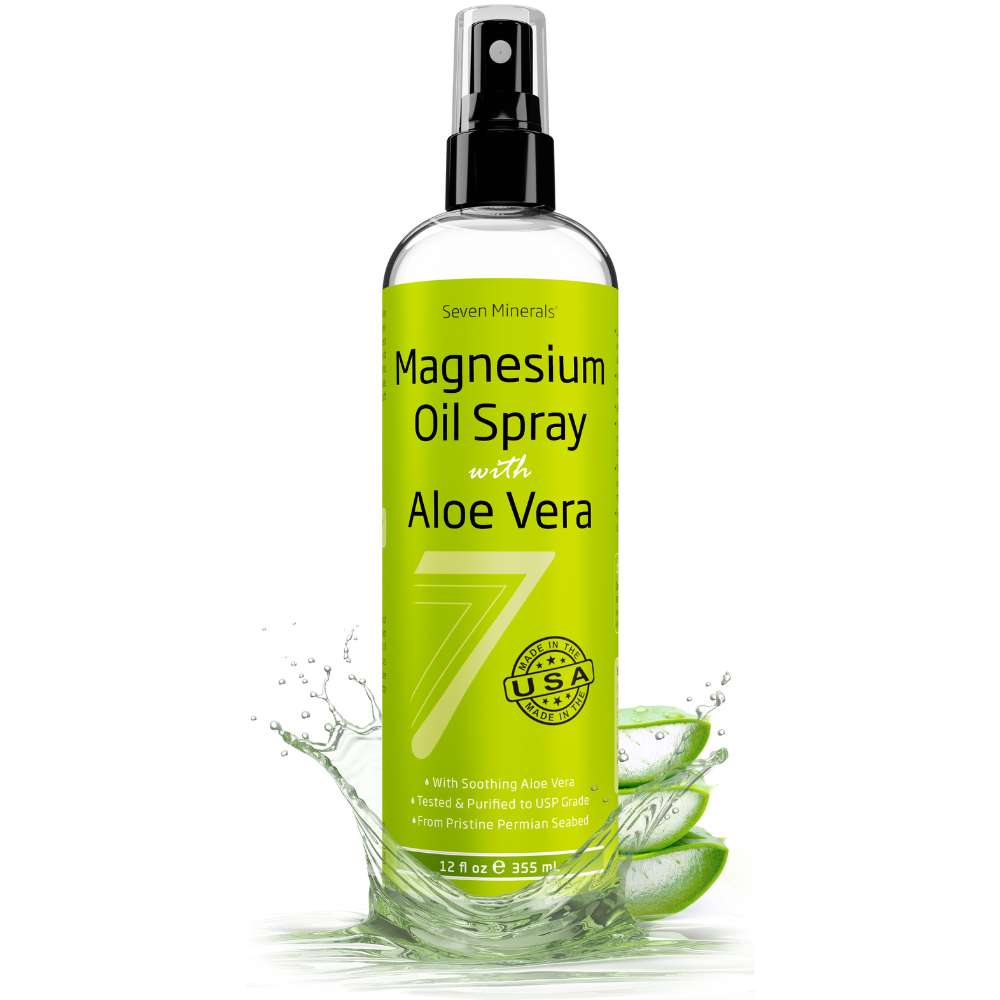
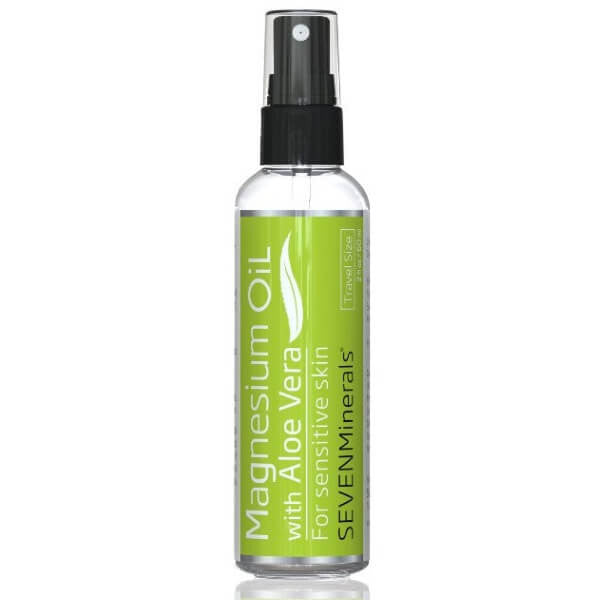
Magnesium oil with aloe vera tends to feel gentler on the skin, making it a practical option if you have sensitivity concerns.
Consistency matters more than the amount you apply in a single session.
Worth saying upfront: magnesium oil spray is not actually an oil. The name comes from the slick, slightly oily feel of a concentrated magnesium chloride solution on the skin. The product itself is water-based.
People reach for it because they want to bring more magnesium into their daily routine without adding another capsule or pill to the mix. Applying it topically lets you target specific areas, like the soles of the feet, sore shoulders, or the back of the neck before bed, and it fits naturally into a morning or evening routine without much effort.
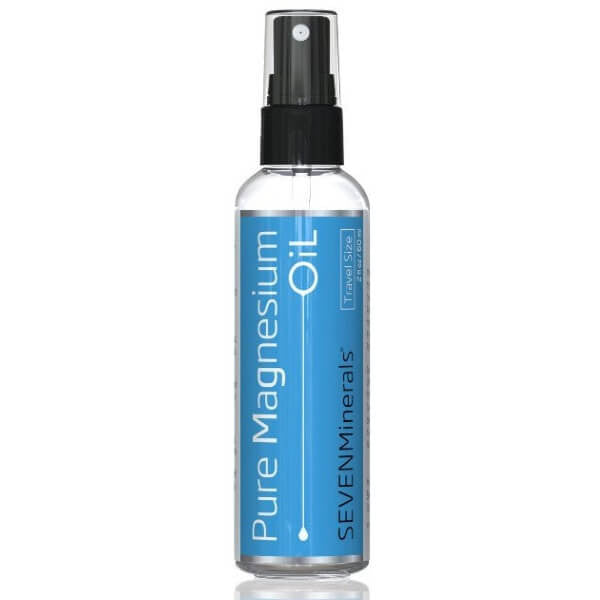
Seven Minerals pure magnesium oil is made from USP Grade magnesium chloride dissolved in purified water. That's the complete ingredient list. Nothing added to extend shelf life, adjust texture, or make the product feel more elaborate than it needs to be.
Short is better.
A quality magnesium oil spray needs two ingredients: magnesium chloride and water. Some formulas add a small amount of aloe vera or another natural carrier, which is reasonable. What you want to avoid is a long list featuring synthetic fragrance, parabens, polyethylene glycols, or artificial thickeners.
Those added ingredients change the feel and texture of the product, but they don't improve what the mineral does. They're there for shelf appeal, not for you.
USP Grade is a purity designation that tells you the magnesium chloride meets established quality standards for that mineral compound. It means the ingredient was tested for consistency and contamination. It's a meaningful purity marker, not a claim about health outcomes, but it does tell you what you're actually putting on your skin.
Tingling or mild stinging is one of the most common things people notice when they first start using topical magnesium. It can be a sign that you're likely magnesium deficient, especially when your body is first getting used to regular topical magnesium use.
The good news is that the sensation often becomes less noticeable or passes altogether with consistent use. You do not need to push through uncomfortable tingling, either. Apply the product according to the directions, let it remain on the skin for about 20 minutes, and then rinse the area with warm water if the sensation is bothering you.
Starting with fewer sprays can also make the first few applications easier. If you know your skin is sensitive, a magnesium oil with aloe vera may provide a gentler-feeling application while still fitting naturally into a regular topical magnesium routine.
Normal. Completely normal.
When the water in the solution evaporates, magnesium chloride crystals remain on the skin surface. That's what creates the slightly chalky or tacky feeling some people notice. It's not a sign of poor quality, and it doesn't tell you anything meaningful about whether the product is sitting on top of the skin or moving through it.
If the residue bothers you, rinse with warm water after 20 to 30 minutes. Most regular users either rinse it off as part of their routine or stop noticing it over time. Neither approach is wrong.
Choosing between formats often comes down to where you want to apply it and how your skin typically responds. This table gives you a straightforward comparison.
|
Format |
Best Used For |
Sensation at Application |
Notes |
|
Pure magnesium oil spray |
Targeted areas, feet, shoulders, muscles |
Can tingle, especially at first |
Start with fewer sprays per product directions. Rinse after 20 to 30 min if needed. |
|
Magnesium oil with aloe vera |
Sensitive skin, daily use, larger areas |
Tends to feel gentler |
A practical starting point if tingling is a concern. |
|
Magnesium lotion or cream |
Dry skin, overnight use, full-body coverage |
Very mild |
Emollient base makes it comfortable for extended contact. |
|
Magnesium roll-on |
Spot use, portability |
Low |
Convenient for knees, ankles, neck, or travel. |
|
Magnesium bath salts or crystals |
Full-body soak, relaxation, general use |
Very mild |
Lower concentration in water, larger surface area, easier to control. |
The magnesium lotions and creams collection is worth looking at if you want to apply magnesium to larger areas and prefer a texture that feels more like skincare. The moisturizing base makes it especially comfortable for overnight use.
If you'd like to see which formats have earned the most consistent repeat use, the Seven Minerals best sellers gives you a clear picture.
The soles of the feet and the inner arms are popular starting points. The skin on the feet is thicker and often less reactive to an initial application, which makes it one of the more forgiving places to begin. The backs of the legs, shoulders, and the back of the neck are other common areas depending on what you're using it for.
Timing matters less than consistency. Some people apply it in the morning as part of getting dressed. Others use it at night as part of a wind-down routine before bed. Either works fine. What makes the difference over time is using it regularly rather than occasionally.
Avoid broken skin, fresh cuts, and actively irritated areas. If you've just shaved, give your skin some time before applying. For anyone dealing with active eczema, open irritation, or a compromised skin barrier, it's worth skipping topical spray altogether until the skin has healed. If you have an ongoing skin condition, talk to your healthcare provider before adding any new topical product. The magnesium salts and crystals format used in a bath, where concentration is lower and you have more control over exposure, may be a more comfortable fit once your skin is in better shape, but even that deserves a conversation with your doctor if your condition is ongoing.
Not for everyone, and it's worth being straightforward about that.
Oral supplementation under medical guidance is a different intervention entirely. Please talk to your doctor rather than replacing a clinical recommendation with a topical product.
If you're looking at the full range of magnesium options and aren't sure where to start, the format comparison above is a reasonable guide.
Topical magnesium fits well into a practical daily wellness routine. It doesn't work like a medication with a predictable timeline, and your experience will be individual.
It's magnesium chloride dissolved in water. The "oil" name comes from the slightly slick feeling it leaves on the skin, not from any actual oil in the formula. A quality spray like Seven Minerals magnesium oil uses USP Grade magnesium chloride and purified water with no synthetic additives.
Tingling or a mild sting is common when first using concentrated topical magnesium and can be a sign that you're likely magnesium deficient. For many people, the sensation becomes less noticeable with regular use as the body adjusts. If the tingling is uncomfortable, let the magnesium remain on your skin for about 20 minutes and then rinse the area with warm water. You can also start with fewer sprays or try a magnesium oil with aloe vera for a gentler application.
Start by following the directions on your specific product, then adjust based on how your skin responds. In general, 5-8 sprays is sufficient, and applying too much in one session is one of the most common reasons first-time users have a frustrating experience.
Facial skin is often more reactive, so a concentrated spray applied directly to the face is not the gentlest approach. A magnesium lotion or a diluted application is typically more comfortable for facial use. If you'd like to try it, start with a very small amount on a less sensitive area first.
Magnesium chloride is the compound used in topical sprays and oils. Magnesium sulfate is the compound in Epsom salt, used primarily in bath soaks. They're different chemical compounds suited to different applications. Neither is universally superior. They fit different routines.
This varies genuinely by person and by what you're hoping to support. There's no universal timeline that applies to everyone. What most people find is that any changes are gradual rather than sudden, so it can be easy to miss if you're expecting something dramatic. Giving it consistent daily use for a reasonable stretch before drawing conclusions is a sensible approach.
No. It's the magnesium chloride crystals left on the skin surface after the water evaporates. It doesn't tell you anything about absorption in either direction. Rinse with warm water after 20 to 30 minutes if it bothers you. It won't change how the product performs.
Seven Minerals has been making topical magnesium products since 2014 with one consistent approach: clean ingredients, honest labeling, and formulas that don't need a complicated story to justify what's inside them.
If you're ready to try it, explore the full Seven Minerals magnesium collection and find the format that fits your routine.
About the Author: Karin is the co-founder of Seven Minerals, a family-owned natural beauty and wellness company founded in 2014 and manufactured in the USA. Seven Minerals products are built around ingredient transparency and practical everyday use.