-
Aloe vera & Aftersun
-
Magnesium Oil & Blends
-
Carrier Oils
-
Massage Oils
-
Hair & Face
-
Magnesium Bath & Beauty
-
Castile Soap
-
Wellness Packs
- Gift Cards
By Karin, Co-founder of Seven Minerals
Buying organic cold-pressed castor oil isn't complicated once you know which words on the label carry real meaning and which ones don't automatically tell you what you might assume. This guide separates those terms clearly, explains what the bottle format does and doesn't change, and helps you buy with confidence.
"Cold-pressed" describes how the oil was extracted. It doesn't establish organic status, hexane-free processing, or whether the oil is unrefined.
USDA Organic certification describes how the source crop was grown. It doesn't confirm cold-pressed processing, hexane-free status, or anything about refinement.
If you want a single-ingredient castor oil, check that the ingredient list contains only Ricinus communis seed oil.
Glass and plastic are both legitimate packaging choices. Bottle material doesn't determine what's in the oil.
The most important buying questions are about what's in the bottle, not what the bottle is made of.
Cold-pressed describes a mechanical extraction method that avoids intentionally applying high heat during extraction. The castor beans are crushed and pressed to release the oil without using heat as part of that process.
That's a useful thing to know about how an oil was made. What it doesn't tell you is whether the source plant was grown organically, whether any solvent was used at any stage of processing, or whether the finished oil went through refinement afterward. Cold-pressed is about extraction mechanics. Nothing more, and nothing less.
So when you see "cold pressed" on a label, you know something real and specific. Just don't assume it covers territory it doesn't describe.
USDA Organic certification indicates that the product or its agricultural ingredients meet applicable USDA organic standards. For castor oil, that centers on how the castor plant was grown and the conditions under which it was cultivated.
That's meaningful. It tells you something verifiable about the source crop.
What it doesn't tell you: whether the oil is cold-pressed, whether hexane was involved in extraction, whether the oil is unrefined, or whether the finished product contains anything beyond Ricinus communis seed oil.
The key point here is simple. Don't assume one label claim automatically establishes another. If organic, cold-pressed, hexane-free, and unrefined all matter to you, verify each one separately. A label that addresses all four is giving you a complete picture. A label that addresses only one is leaving three questions unanswered.
Hexane is a petroleum-derived solvent that some manufacturers use during oil extraction because it draws a higher yield from plant material than mechanical pressing alone. It's used broadly in the food and cosmetic oil industry, and the finished product is generally processed to remove it before it reaches consumers.
Customers who specifically want a hexane-free castor oil are making a clear, reasonable preference: they want an oil extracted by mechanical means only, with no solvent involved at any point. That's a valid thing to care about.
If it matters to you, look for "hexane-free" stated directly on the label or in the product description. Don't assume cold-pressed automatically means hexane-free. The two claims describe different things, and both need to appear on a label before you can know both apply.
This one is easy to verify. Look at the ingredient list. If you're shopping for a pure castor oil, that list should contain one entry: Ricinus communis seed oil.
That's the full botanical name for castor oil. If the ingredient list is longer, you're looking at a blend or a formulated product. That might be perfectly fine for what you need, but it's a different product than a single-ingredient castor oil.
If you're specifically looking for a single-ingredient castor oil, checking that list takes about five seconds and removes any doubt.
Worth saying plainly: a shorter ingredient list isn't automatically safer, more effective, or the right choice for everyone. It simply means the product is what it says it is, with nothing added. For a lot of people shopping for a pure castor oil, that transparency is exactly the point.
No. This is worth being direct about.
Glass and plastic are packaging materials. When the formulation is otherwise the same, the packaging choice doesn't by itself make a castor oil more effective, purer, safer, or higher quality. That framing would be misleading, and it isn't accurate.
What the bottle format does affect is your practical experience using it. Those tradeoffs are real, even though they're not about quality.
|
Factor |
Glass Bottle |
Plastic Bottle |
|
Weight |
Heavier |
Lighter |
|
Breakability |
Can break if dropped |
Less prone to breakage |
|
Handling |
May appeal to customers who prefer glass packaging |
May appeal to customers who prefer a lighter container |
|
Price |
Depends on current SKU pricing |
Depends on current SKU pricing |
|
Oil quality |
Determined by the product formulation, not the bottle |
Determined by the product formulation, not the bottle |
Some customers have a strong preference for glass. They like the feel of it, or it fits a particular space in their bathroom, or they plan to reuse the container. That's a legitimate reason to choose glass.
Other customers prefer plastic. It's lighter, harder to break, and easier to handle day to day. That's an equally legitimate reason.
Neither preference is a quality judgment. It's a personal and practical one.
If you're specifically shopping for castor oil in a glass bottle, here's a useful framing: evaluate the oil first, the packaging second. Verify the organic and processing claims that matter to you, check the ingredient list, and then choose the bottle format that fits your preferences and how you plan to use it.
Consider someone shopping for castor oil to use on their brows. They find three products on the shelf, all labeled "castor oil."
The first says "organic" but mentions nothing about cold-pressing or hexane. The extraction method and whether a solvent was used are both unknown.
The second says "cold pressed" but carries no organic certification. How the source crop was grown is unknown.
The third says organic, cold-pressed, and hexane-free. The ingredient list reads: Ricinus communis seed oil.
The third product answers the most questions. That doesn't mean the first two are poor products. It means the third one leaves fewer things unverified, which matters when someone is being intentional about what they apply to their skin. Fewer unknowns on a label is always a reasonable thing to prefer.
For customers considering castor oil for a brow or lash routine, reviewing the ingredient list carefully and following the specific product's directions is the right starting point. Check whether those uses are included in the directions for the exact product you're purchasing.
A few other details are worth a look before you buy.
Color, and what it does and doesn't mean. Castor oil can vary in color depending on the raw material and how it was processed. Color alone isn't a reliable measure of quality, purity, organic status, or effectiveness. Use the verified label information as your actual buying guide.
Country of origin and manufacturing. Knowing where a product was made helps you understand the supply chain. It doesn't determine quality on its own, but it's a reasonable thing to look for.
Size and price per ounce. Compare available sizes and price per ounce based on how you expect to use the product. If you plan to use castor oil regularly across multiple applications, comparing the per-ounce cost across sizes is worth a few minutes.
Approved uses for the specific product. A castor oil may be marketed for multiple cosmetic uses, but the approved directions vary by product and SKU. Check the label for the uses and application guidance that apply to the specific product you're purchasing. What's listed on one product may not apply to another.
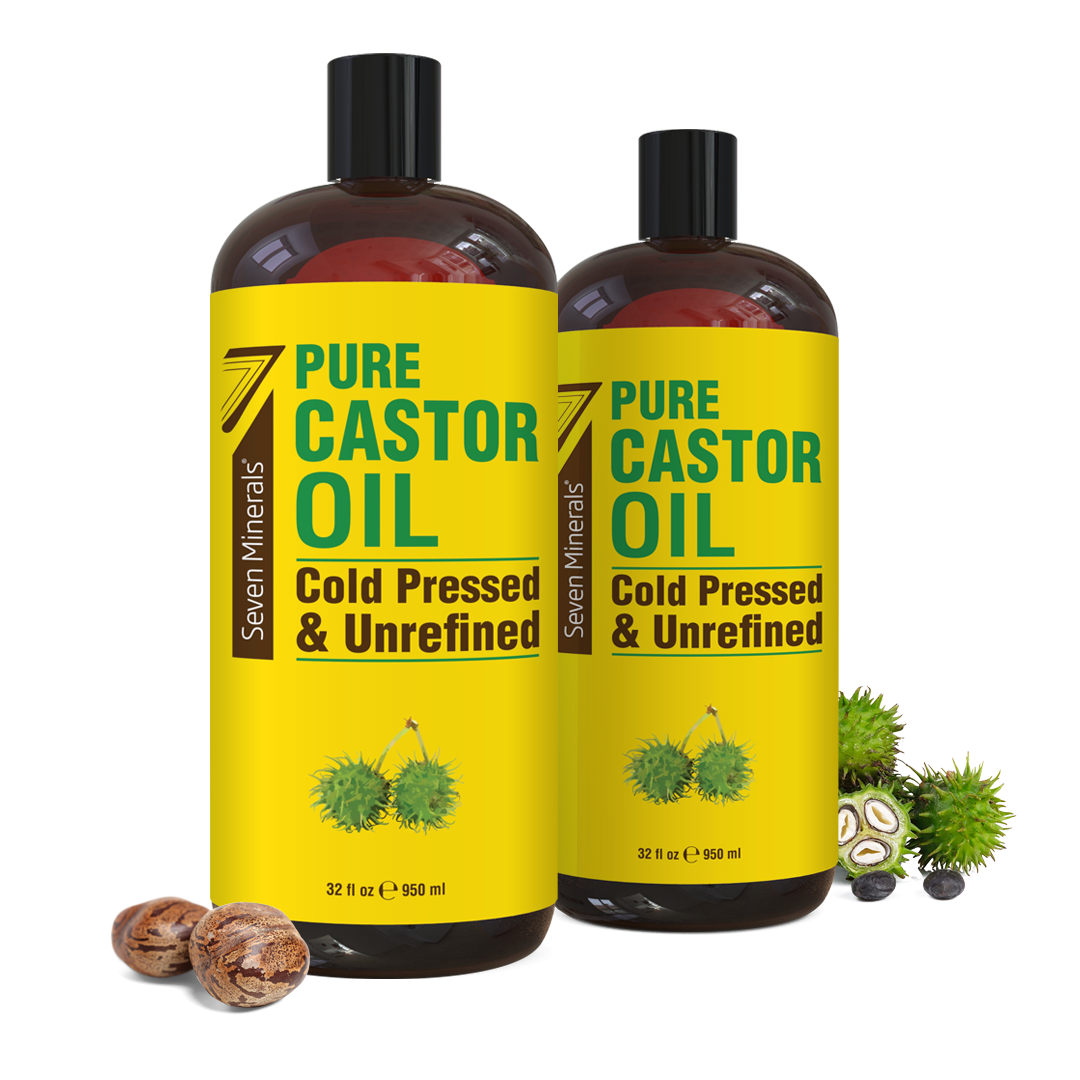
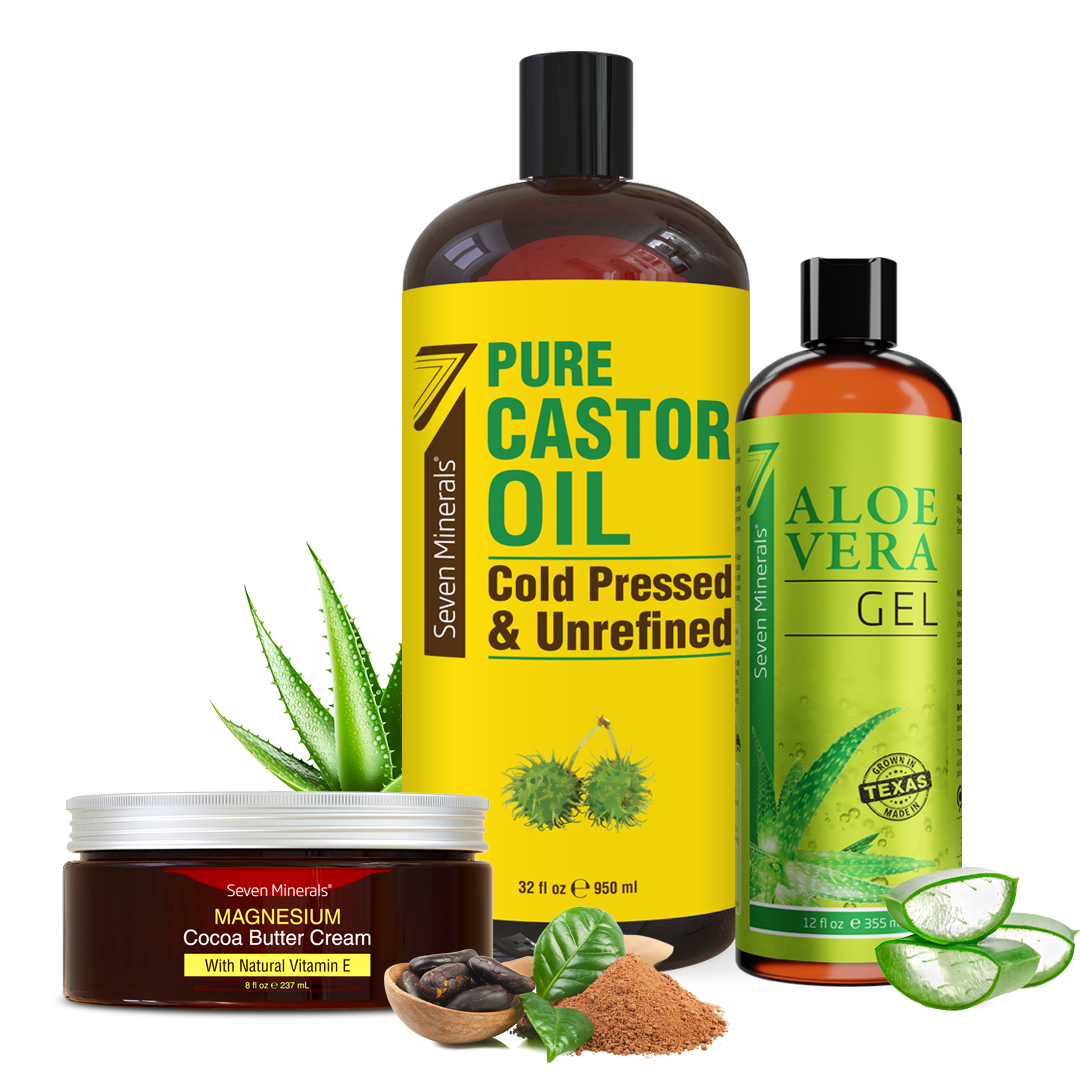
Seven Minerals makes its castor oil as a single-ingredient product: Ricinus communis seed oil. It's part of the carrier oils collection, and if you're building a natural hair and skin care routine, it fits alongside other simple, ingredient-conscious products in the hair and face care collection.
If you're curious about pairing it with another straightforward natural product, the castor oil and aloe vera pairing brings both into one routine. And if you want a quick look at what other customers reach for most, the best sellers collection gives you that picture in one place.
For the specific certification, packaging options, and approved uses of the exact SKU, check the product page directly. SKU-level details are the reliable source for those facts.
Follow the expiration, PAO (period after opening), and storage guidance provided with the specific product you purchase. Generally, keeping any plant-based oil away from direct sunlight, heat, and moisture helps preserve it. Beyond that, the product label is the right reference.
Is cold-pressed castor oil the same as unrefined castor oil?
Not exactly. Cold-pressed refers to the extraction method, specifically that heat wasn't intentionally applied during pressing. Unrefined means the oil wasn't further processed after extraction to alter its color, odor, or composition. An oil can be cold-pressed and still go through some form of refinement afterward. If a product claims both, that's worth noting. If only one term appears, check whether the label addresses the other separately.
Why does castor oil look different from brand to brand?
Color variation in castor oil reflects differences in raw material and processing. Color alone isn't a reliable indicator of quality, purity, or organic status. Use the verified label information as your primary buying guide rather than making assumptions based on appearance.
If I want castor oil in a glass bottle, does it mean the oil is better quality?
No. Packaging format and oil quality are separate things. When the formulation is otherwise the same, choosing glass over plastic doesn't change what's in the oil. Some customers prefer glass for the feel of it, for practical reuse, or because it fits their routine. Those are reasonable personal preferences. They aren't quality distinctions.
What does the ingredient list tell me about whether a castor oil is pure?
A lot. If you're looking for a single-ingredient castor oil, check that the list contains only Ricinus communis seed oil. A longer list means the product is a blend or a formulated product, which may suit certain purposes but isn't the same as a pure, single-ingredient oil. Reading the ingredient list is the most direct way to confirm what you're actually buying.
Can I use castor oil on my face or near my eyes?
Check whether facial use is included in the product directions for the specific castor oil you're considering. Individual skin responses vary. Follow the label and appropriate patch-testing guidance where recommended. Don't assume that any castor oil is universally appropriate for all skin types or areas.
How long does castor oil keep once opened?
Follow the expiration and period-after-opening guidance provided with the specific product. Keeping it away from heat, light, and moisture is generally good practice for any plant-based oil. If the oil develops an off odor or noticeably changes in appearance, that's the practical signal to replace it.
Does buying organic, cold-pressed castor oil mean I'm getting all four: organic, cold-pressed, hexane-free, and unrefined?
Not automatically. Each of those is a separate claim describing a different aspect of how the oil was grown, extracted, processed, and finished. A product that addresses all four is giving you a full picture. A product that mentions only one or two is leaving the others unverified. The straightforward approach is to check each claim separately rather than assume they travel together.
Karin is the co-founder of Seven Minerals, a family-owned natural wellness company she helped build starting in 2014. Seven Minerals manufactures its products in the USA with a focus on ingredient transparency, clean formulations, and practical everyday wellness.